As an Amazon Associate, we earn from qualifying purchases. Some links on this site are affiliate links at no extra cost to you. Our recommendations are based on thorough research and editorial judgment.

Interactive Feeders as Training Tools: How It Works

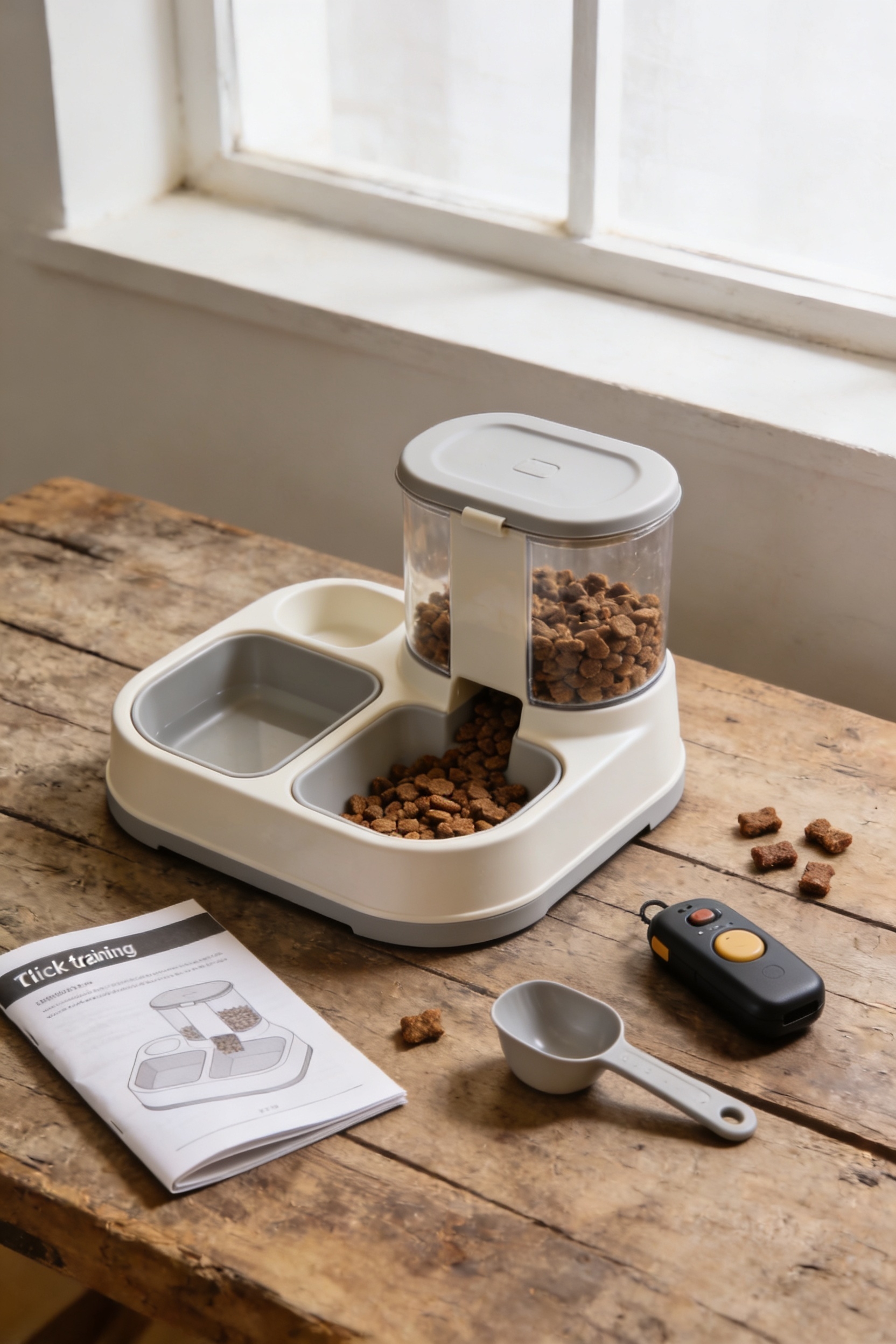
I’m sure you’ve noticed your dog demolishes a regular bowl in seconds flat, then begs for entertainment all day. Interactive feeders flip that script by turning mealtime into a puzzle that keeps their brain engaged. You’re basically packaging training into every bite—layering in commands like “sit” or “leave it” before they access food, which strengthens obedience while building focus. The real magic? Slower eating means better impulse control, and that mental workout preps them for actual training sessions. Stick around to discover which commands work best and how to track whether it’s actually working.
Key Takeaways
- Interactive feeders transform routine meals into problem-solving activities that engage your dog’s brain during feeding time.
- Puzzle work builds cognitive pathways and mental readiness that prepare dogs to learn obedience commands more effectively.
- Layer basic commands like “sit” or “leave it” immediately before granting feeder access to link obedience with rewards.
- Portioning food through interactive feeders enforces working for each bite, naturally shaping impulse control and patience.
- Track completion time, demeanor changes, and behavioral improvements to measure your dog’s learning progress and feeder effectiveness.
Why Interactive Feeders Transform Into Training Tools
You may be interested

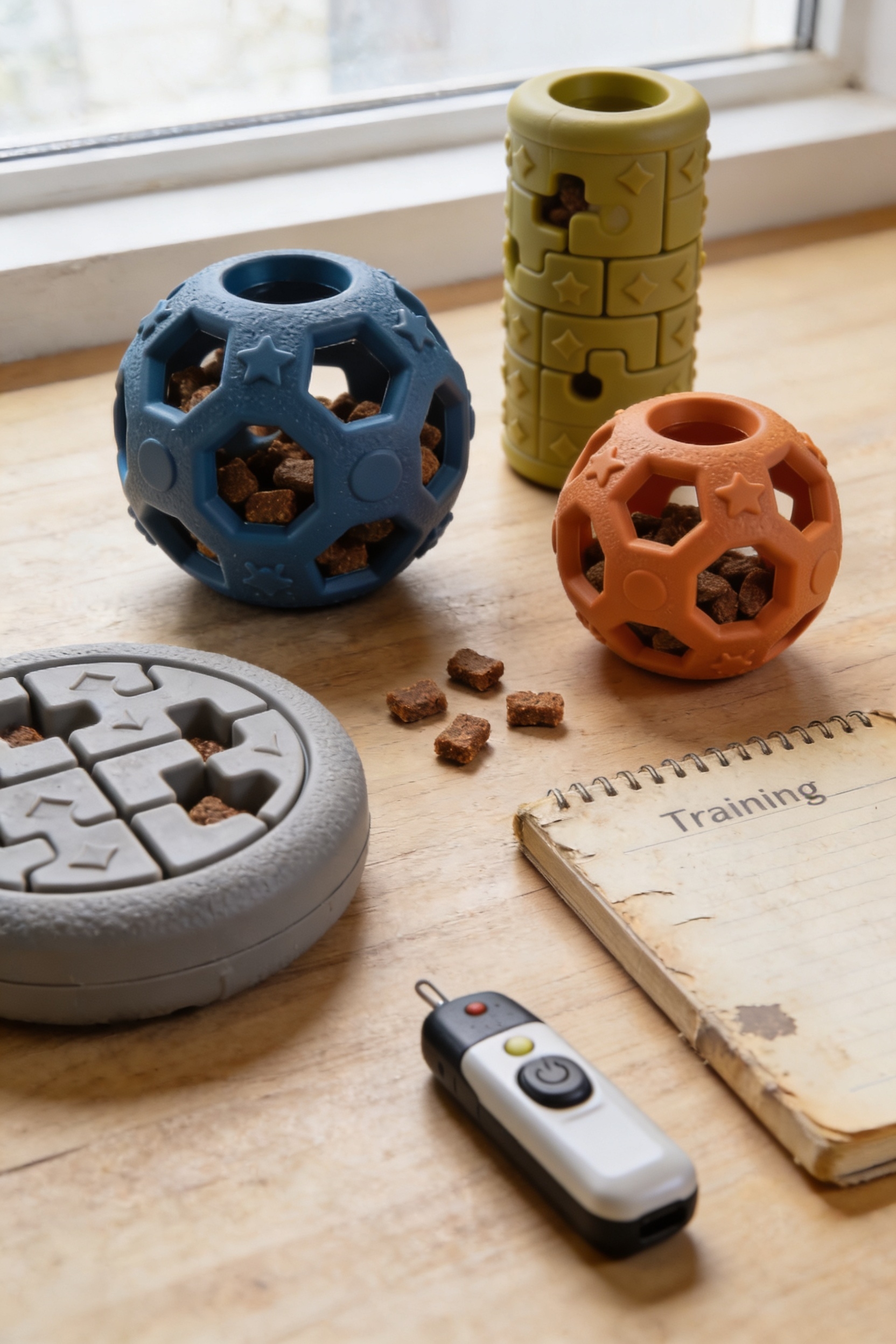
Because here’s the thing—when you’re feeding your dog or cat from a regular bowl, you’re basically handing them a free meal with zero strings attached, and I’m sure you’ve noticed they just demolish it in like thirty seconds flat. Interactive feeders flip that script entirely. They transform mealtime into an actual training opportunity where your pet has to earn their food through problem-solving. Now, that sensor enrichment keeps their brain firing on all cylinders while they work for each bite. I mean, you’re basically converting a passive activity into something that builds confidence and focus. Plus, there’s this social facilitation thing happening too—your pet associates you with the challenge and the reward, which strengthens your bond. Suddenly, feeding isn’t just refueling; it’s legitimate training. Treat-dispensing puzzles like the Starmark Bob-A-Lot deliver mental stimulation with food rewards while also functioning as slow feeders to aid digestion and help prevent bloat.
How Puzzle-Work Preps Dogs to Learn
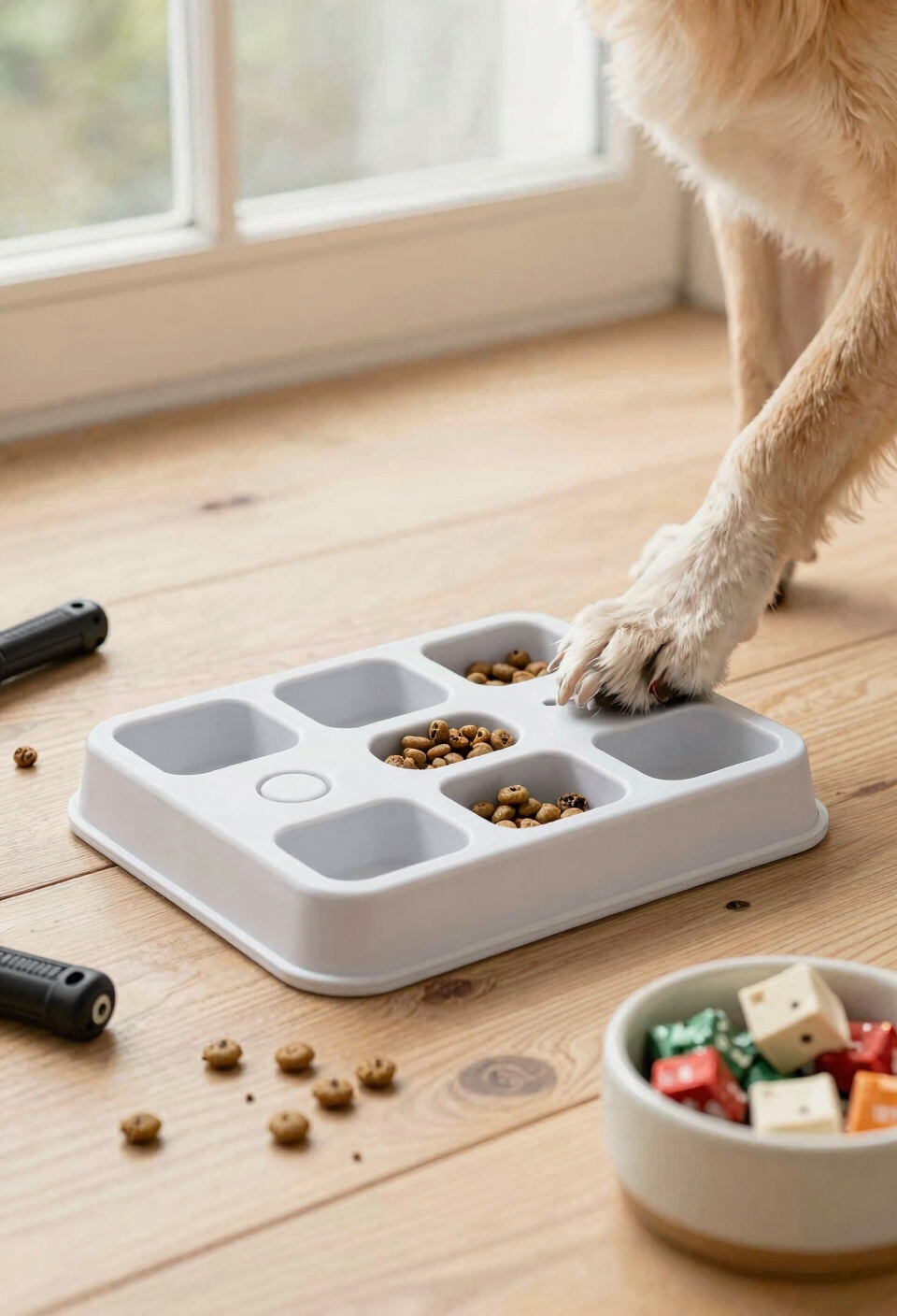
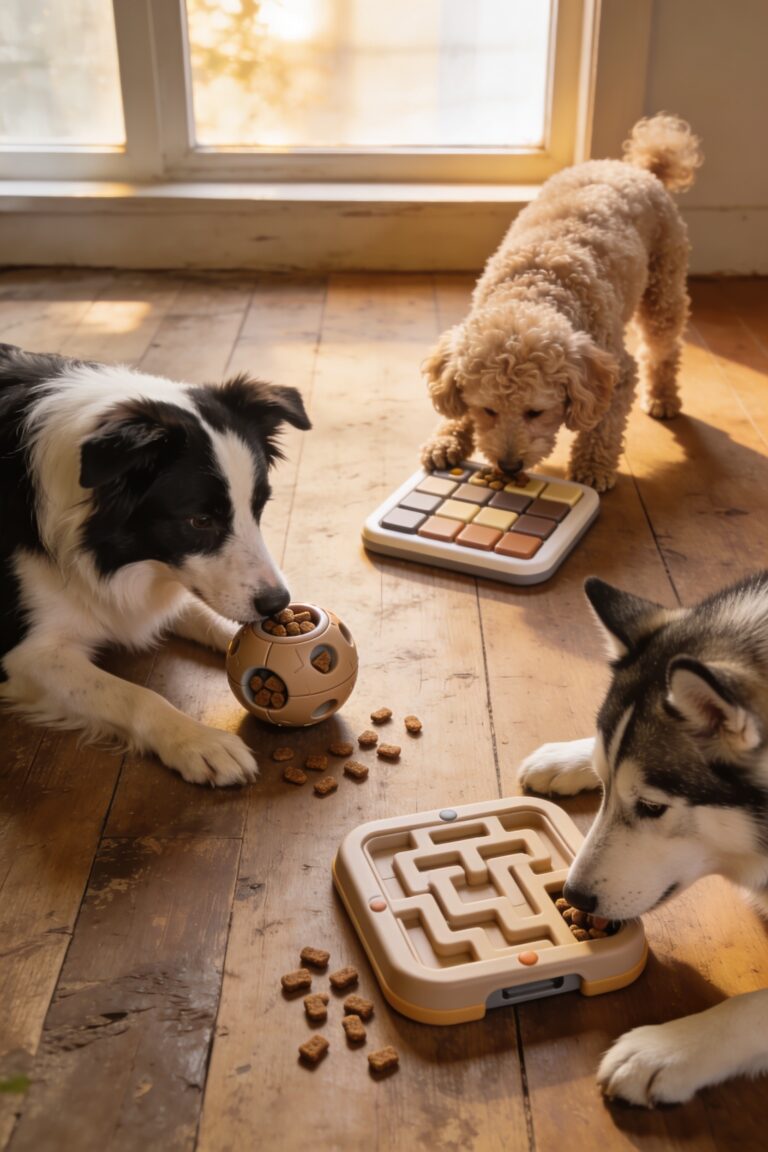
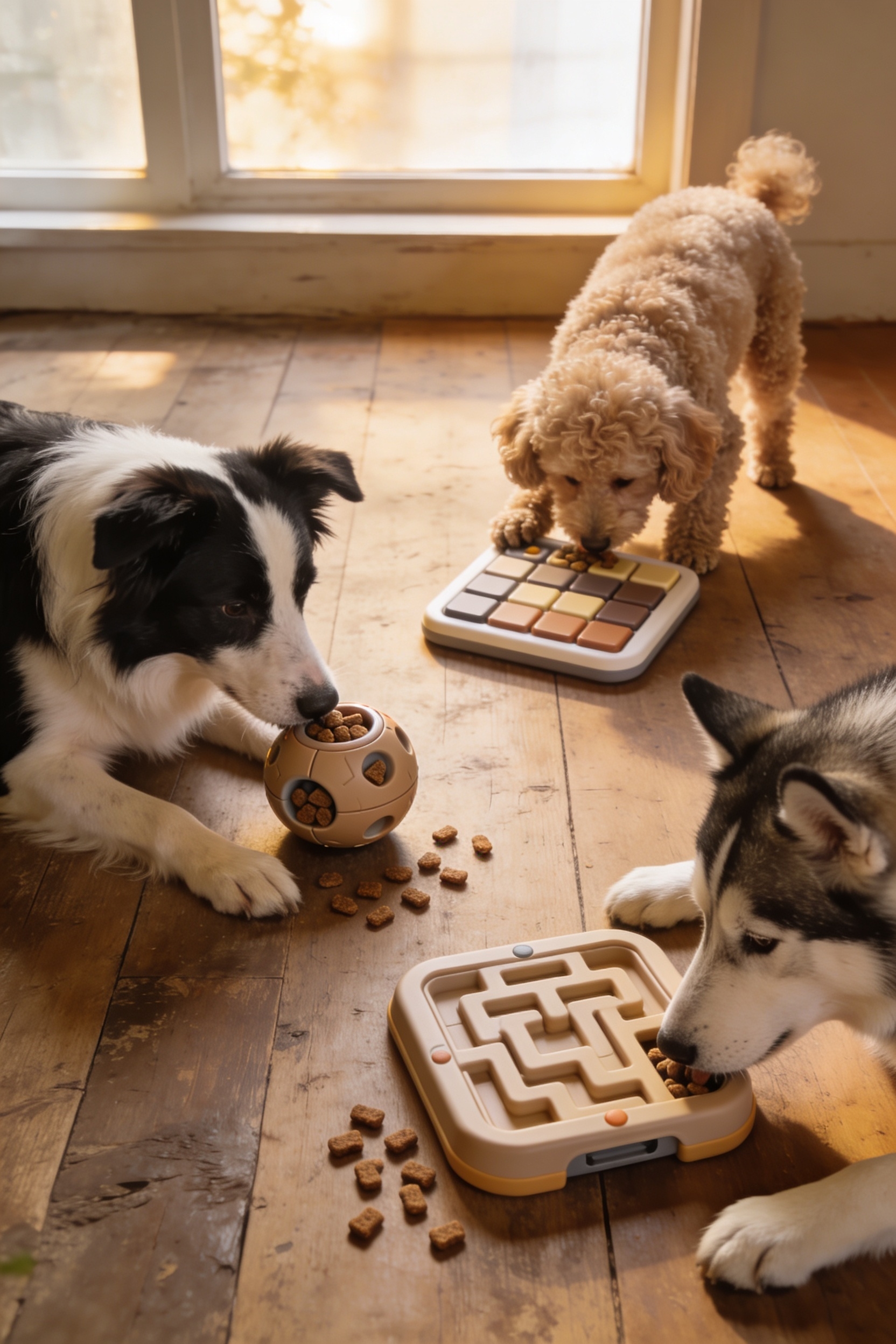
Working through a puzzle feeder is basically like your dog’s brain doing pushups—it preps them for actual learning in ways a regular bowl just can’t match. I mean, when your dog engages in sensory exploration during puzzle-solving, they’re building mental pathways that make training stick better later. All right, here’s what’s actually happening: they’re learning problem sequencing—figuring out step one leads to step two, which finally gets them to the food reward. That’s literally the same cognitive framework you’ll use when teaching sit, stay, or recall commands. Obviously, a tired brain is a focused brain. Your dog’s sharpened problem-solving skills transfer directly into obedience training. They’re basically already warmed up and ready to absorb new commands once you crack out the treat pouch. This mental stimulation from treat-dispensing puzzles and snuffle balls creates the ideal cognitive foundation for dogs to engage with formal training protocols more effectively.
Embed Commands Into Interactive Feeder Sessions
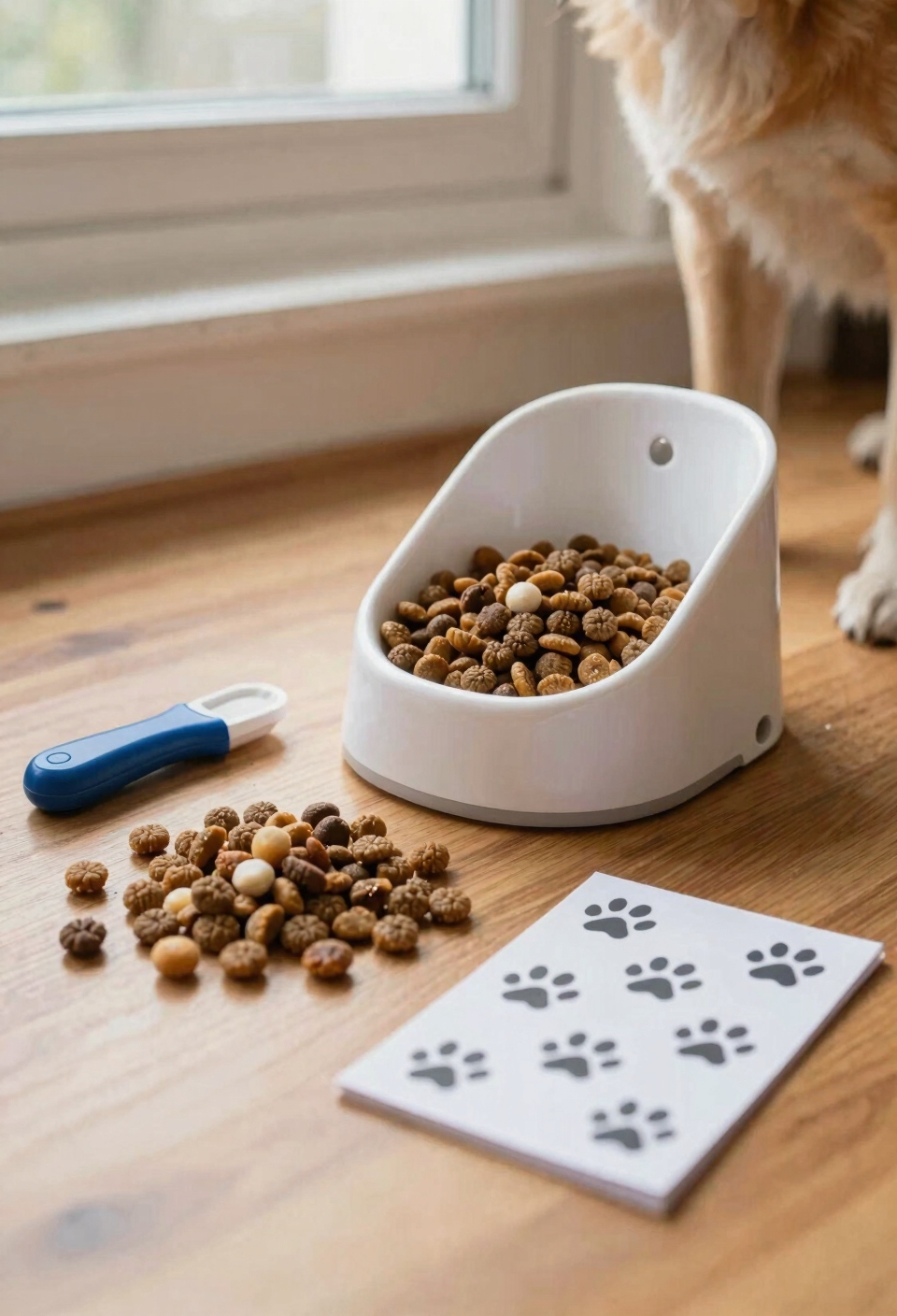
Now that your dog’s brain’s all warmed up from puzzle work, you’re sitting on a goldmine of training opportunity—and I mean, why waste it by just letting them eat and move on?
Here’s what I do: I layer in basic commands right before they access the feeder. Ask for a solid “sit” or “wait,” then let them tackle the puzzle. The key’s your reward timing—release them immediately after they nail the command, so they connect obedience directly to food access.
Your handler cues become part of the ritual. “Leave it” works beautifully here too, since they’re already focused. You’re effectively turning mealtime into structured training without them realizing it’s work. That’s the sweet spot right there. For dogs that need extra mental stimulation during training sessions, pairing interactive feeders with treat-dispensing toys creates additional engagement opportunities beyond mealtime.
Recommended Products
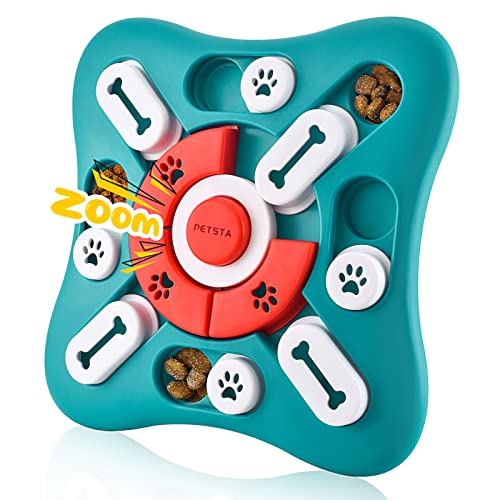

【Upgrade Dog Puzzle】Our dog puzzle toy is moderate level with more challenging ,difficult than level 2, not only easy slide steps, but require your dog's ability to learn sequential steps and combinations to seek hidden treats while keeping mental active .There are easy slide step and harder step in the puzzle box , dogs have to find a right way to move the red round sliders and the center parts for food, higher skills and mind required , great for the smart dogs.
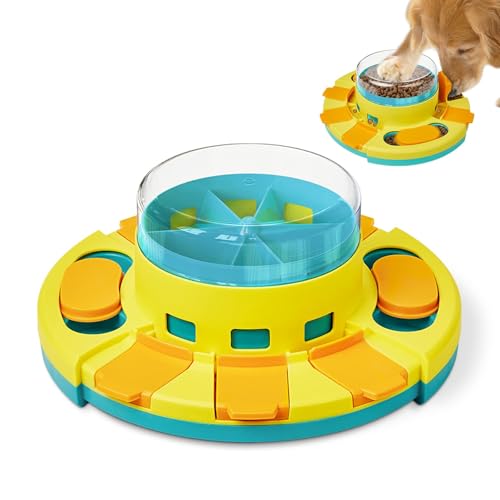
2 Levels in 1 Toy: start your pups off with a level 1 puzzle, add some treats in the base compartments and watch your dogs get their tasty reward by nudging the lids. For dogs who have mastered level 1, for added challenge in level 2, just put some treats in the top compartments, teach your dogs to press the top cover to dispense treats down into the base compartments and finally enjoy their reward
Build Impulse Control Through Portioned Feeding

Slowing down your dog’s access to food might sound like the opposite of what you’d want—I mean, who doesn’t want their pup to eat and move on?—but here’s the thing: portioned feeding is basically impulse control boot camp disguised as dinner. When you use an interactive feeder, you’re forcing your dog to work for each bite instead of inhaling everything in thirty seconds. This portion control approach teaches impulse shaping in real time. Your dog learns that patience pays off, that frantically pawing at the feeder doesn’t speed things up, and that calm problem-solving actually gets results. I’m sure you’ve noticed how much calmer dogs act after they’ve actually had to think during mealtime. It’s not magic—it’s just their brain getting tired in the best way possible. Interactive puzzle toys with treat dispensers provide mental stimulation and extended playtime while rewarding problem-solving behaviors, making them ideal complements to your dog’s regular feeding routine.
Recommended Products

Slow Down Mealtime Up To 10x: Puzzle dog food bowls slow feeder and maze dog food bowl puzzle designed with ridges and maze patterns contributes to your puppy eating slower than 10 times, especially for those likely to gobble up. Slow feeder dog bowls medium breed assist the pets in digesting food better, which lets your pets form a healthy habit of eating slowly and chewing slowly. Slow feeding dog bowl are suitable for medium breed pets

【Slow Feeding Design-IQ Improvement】The Atdoall slow feeder is designed with a unique 3-layer maze mechanism, which can effectively slow down the dog's eating speed and train the dog's thinking. Thereby preventing indigestion and obesity and improving the dog's intelligence.
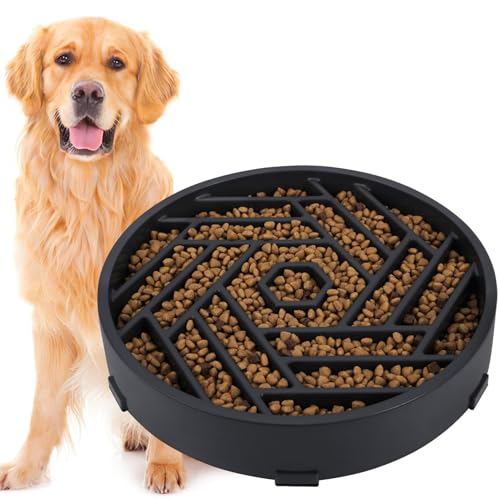
【Maze Design to Slow Down Eating】Puzzle dog bowl slow feeder designed with unique labyrinth exploration effectively works to slow down dog’s eating rate, especially for those likely to gobble up. Slow eating dog bowl helps prevent bloating, discomfort, and promotes better digestion, while also encouraging healthier eating habits and reducing overeating
Progressive Difficulty: When to Escalate Puzzle Complexity
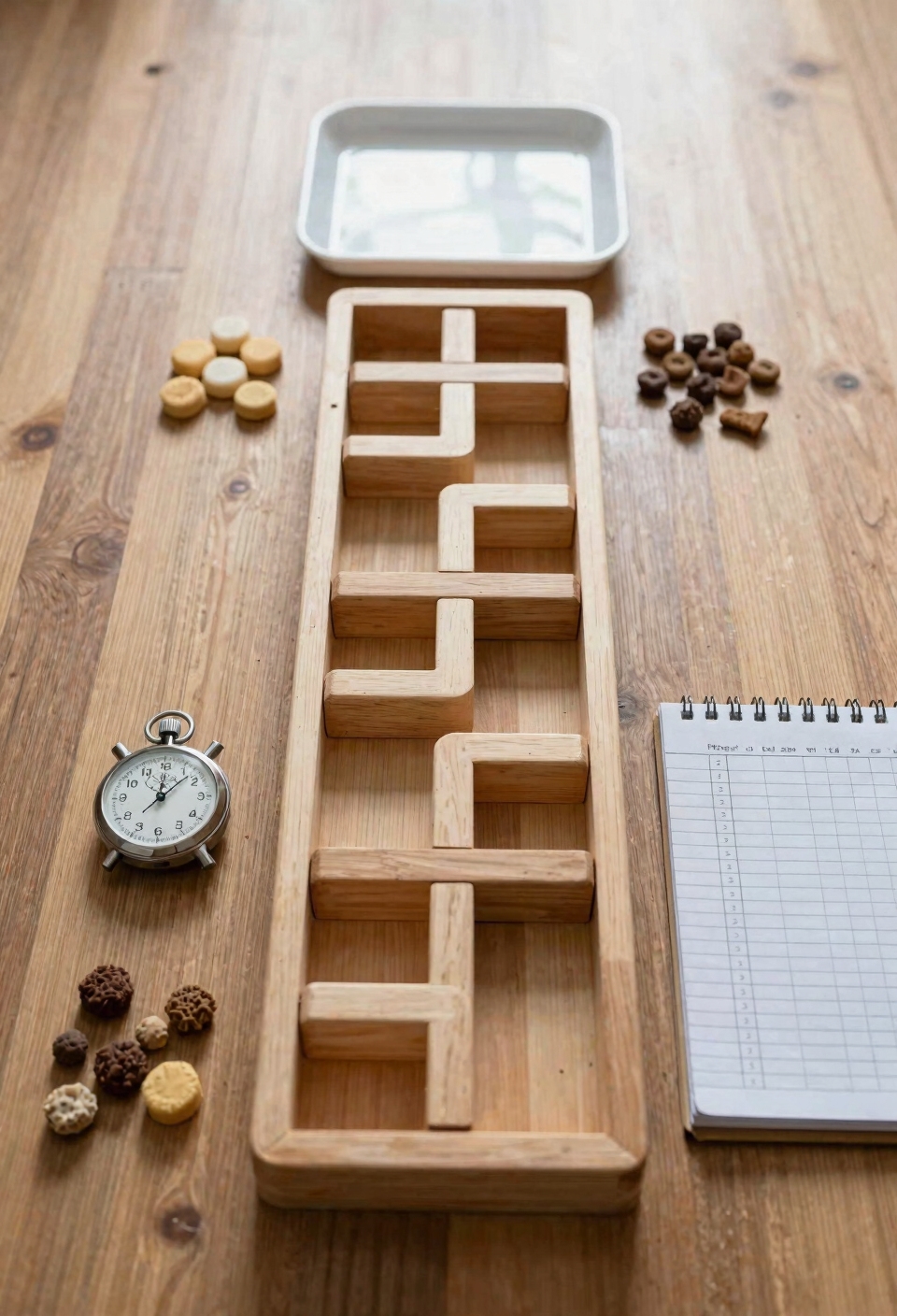
Once your dog’s figured out the basics of an interactive feeder—and I mean really mastered it, not just pawed at it a few times before giving up—that’s when the real fun starts. Now, here’s where I see most people stall: they keep using the same puzzle forever. Your dog hits a skill plateau, gets bored, and suddenly you’re back to square one.
The trick? Graduated timers and progressive challenges. I’m sure you’ve noticed when something becomes too easy, it’s no longer interesting. Bump up the difficulty incrementally—add extra compartments, increase puzzle complexity, or introduce timed challenges. Products like the Outward Hound progressive-level systems offer multiple difficulty tiers specifically designed to match your dog’s evolving skill set. Obviously, watch for frustration signals. You want that sweet spot where your dog stays engaged without throwing in the towel. That’s where real training magic happens.
Recommended Products

Medium slow feeder dog bowl – helps slow down eating up to 10X; this SLOW level feeder is designed for small to medium dog breeds who need to slow their pace a little

Large slow feeder dog bowl – helps slow down eating up to 10X; this SLOWEST level feeder is best for very fast eaters and medium to large dog breeds

Dog Puzzle Toy – Level 4 Expert: Designed for smart pups who have mastered Level 3, this Nina Ottosson dog puzzle requires complex steps to uncover hidden treats
Which Commands Work Best With Interactive Feeders?
If you’ve been working with interactive feeders, you’ve probably noticed that certain commands pair up with them way better than others—and honestly, that’s when your dog’s mealtime becomes less about just eating and more about actually learning something useful. “Sit” and “wait” are your bread and butter here since they build impulse control right before your dog gets access to the puzzle. I’m sure you’ve noticed how powerful that combination gets. Now, “leave it” works incredibly well too, especially when you’re introducing the feeder itself. For something different, try incorporating a heel cue or recall practice beforehand—it keeps their brain engaged before they even touch the device. All right, the key’s mixing commands that calm them down with ones that get them thinking. Just as reinforced stitching and construction makes toys more durable for extended play, consistency in command training during feeding sessions strengthens your dog’s ability to follow directions reliably.
Recommended Products

【Size】: L9.44" * W9.44"* H1.14" suitable for cats, puppies and small dogs.

【Size】: L9.44" * W9.44"* H1.14" suitable for cats, puppies and small dogs.

2 Levels in 1 Toy: start your pups off with a level 1 puzzle, add some treats in the base compartments and watch your dogs get their tasty reward by nudging the lids. For dogs who have mastered level 1, for added challenge in level 2, just put some treats in the top compartments, teach your dogs to press the top cover to dispense treats down into the base compartments and finally enjoy their reward
Troubleshooting Frustration and Feeder Abandonment
Your dog’s probably going to stare at that fancy puzzle feeder you just bought like it personally insulted their intelligence—and honestly, that’s when a lot of people just shove it in the closet next to the treadmill they swore they’d use.
Now, here’s the thing: avoidance signals like pacing away or ignoring the feeder don’t mean your dog’s broken. I mean, you’ve basically handed them a tiny unsolvable mystery during dinner. Start with something easier instead. Rotate in different puzzle styles for better environmental enrichment, and watch for those moments where they actually succeed. Obviously you’re going to celebrate like they just won the lottery. Remember that supervising play sessions without letting your dog work unsupervised for more than 30 minutes at a time helps prevent frustration and fatigue during feeder training.
Recommended Products

[Treat Distribution] Our food dispenser has differently sized spheres at both ends. As dogs push the toy, it moves within a fixed area, allowing dogs to continuously chase and play with it. During movement, food is dispensed from the food holes on both sides of the toy.

Large slow feeder dog bowl – helps slow down eating up to 10X; this SLOW level feeder is best for fast eaters and medium to large dog breeds

3-in-1 Puzzle Bowl for Larger Dogs: 10.4 in x 2.8 in size, combines a lick mat, slow feeder, and interactive puzzle game to reduce mealtime boredom, support mental stimulation, and encourage healthy eating habits for medium to large breeds
Tracking Training Success From Your Interactive Feeder
So you’ve got your dog actually engaging with the puzzle feeder now—they’re not abandoning it in the corner, and you’re celebrating those tiny victories like a proud parent. Now here’s where it gets interesting: you’ve gotta actually track what’s happening. I’m sure you’ve noticed your dog’s getting faster at solving it, right? That’s your first behavior metric—completion time. Write down how long it takes them to finish each meal. You’ll also want to monitor their overall demeanor. Are they calmer after puzzle sessions? Less destructive around the house? These progress tracking observations tell you whether the feeder’s actually working for your dog’s brain and behavior, not just your Instagram feed. Beyond behavioral changes, pay attention to dental health improvements since interactive feeders combined with proper chew toys can contribute to better teeth and gum condition through natural gnawing during mealtime.
Frequently Asked Questions
What Age Can Puppies Safely Start Using Interactive Feeders for Training?
I’d recommend starting at eight weeks with gradual introduction to interactive feeders. Begin with simple designs, supervise closely, and celebrate successes to build your puppy’s confidence and problem-solving skills early.
Are Interactive Feeders Suitable for Senior Dogs or Those With Physical Limitations?
Absolutely—they’re like gentle bridges to mental engagement. I’d recommend senior-friendly designs with mobility aids that reduce strain. Slower-paced feeders accommodate arthritis and limited mobility while keeping your aging companion’s mind sharp and spirit vibrant.
How Do I Clean and Maintain Interactive Feeders Between Training Sessions?
I’d recommend sanitizing tools after each session—wash removable parts with hot soapy water and air dry completely. I rotate my feeders on a schedule, which prevents bacterial buildup and extends device longevity substantially.
Can Multiple Pets Share the Same Interactive Feeder Without Resource Guarding Issues?
I’d recommend against shared feeders; they’ll likely trigger resource guarding. Instead, I suggest multiple pet feeder rotation in separate spaces with staggered enrichment timing to prevent conflict and make certain each pet gets individual cognitive engagement safely.
What’s the Ideal Mealtime Duration When Using Interactive Feeders for Training?
I’d recommend starting with 10-15 minutes for your pet’s ideal duration, then gradually increase it as they build problem-solving skills. This timeframe balances mental engagement without causing frustration or fatigue during training sessions.
Conclusion
Look, I’m sure you’ve noticed how your dog scarfs down kibble in thirty seconds flat. Now imagine that same meal taking ten minutes while she’s actually thinking. All right, so here’s the thing—you’re not just feeding your pup; you’re basically turning dinnertime into a brain gym. That’s the whole magic trick right there.