As an Amazon Associate, we earn from qualifying purchases. Some links on this site are affiliate links at no extra cost to you. Our recommendations are based on thorough research and editorial judgment.

Cognitive Toys That Help Combat Destructive Behavior

Look, I’m sure you’ve noticed that bored dogs destroy everything—so here’s the deal: cognitive toys like treat-dispensers and puzzle toys redirect your dog’s natural chewing urges toward problem-solving instead of your furniture. Medical-grade silicone and reinforced thermoplastic hold up best against serious chewers. The trick? Rotate toys every few days, pair them with daily exercise, and supervise initial sessions so your pup actually figures out how they work. Stick with me, and I’ll show you exactly how to implement this without turning your home into a demolition site.
Key Takeaways
- Cognitive toys redirect natural chewing and problem-solving urges toward productive outlets, addressing root causes of destructive behavior.
- Treat-dispensing and puzzle toys promote sustained mental engagement, preventing boredom-related destruction during solo play sessions.
- Reinforced thermoplastic and medical-grade silicone materials withstand aggressive chewing while maintaining safety and durability for serious chewers.
- Rotating toys every few days preserves novelty and sustained interest, preventing habituation and destructive episodes.
- Combining cognitive toys with daily exercise and training sessions delivers optimal results in reducing destructive habits.
Why Destructive Dogs Need Cognitive Toys
You may be interested
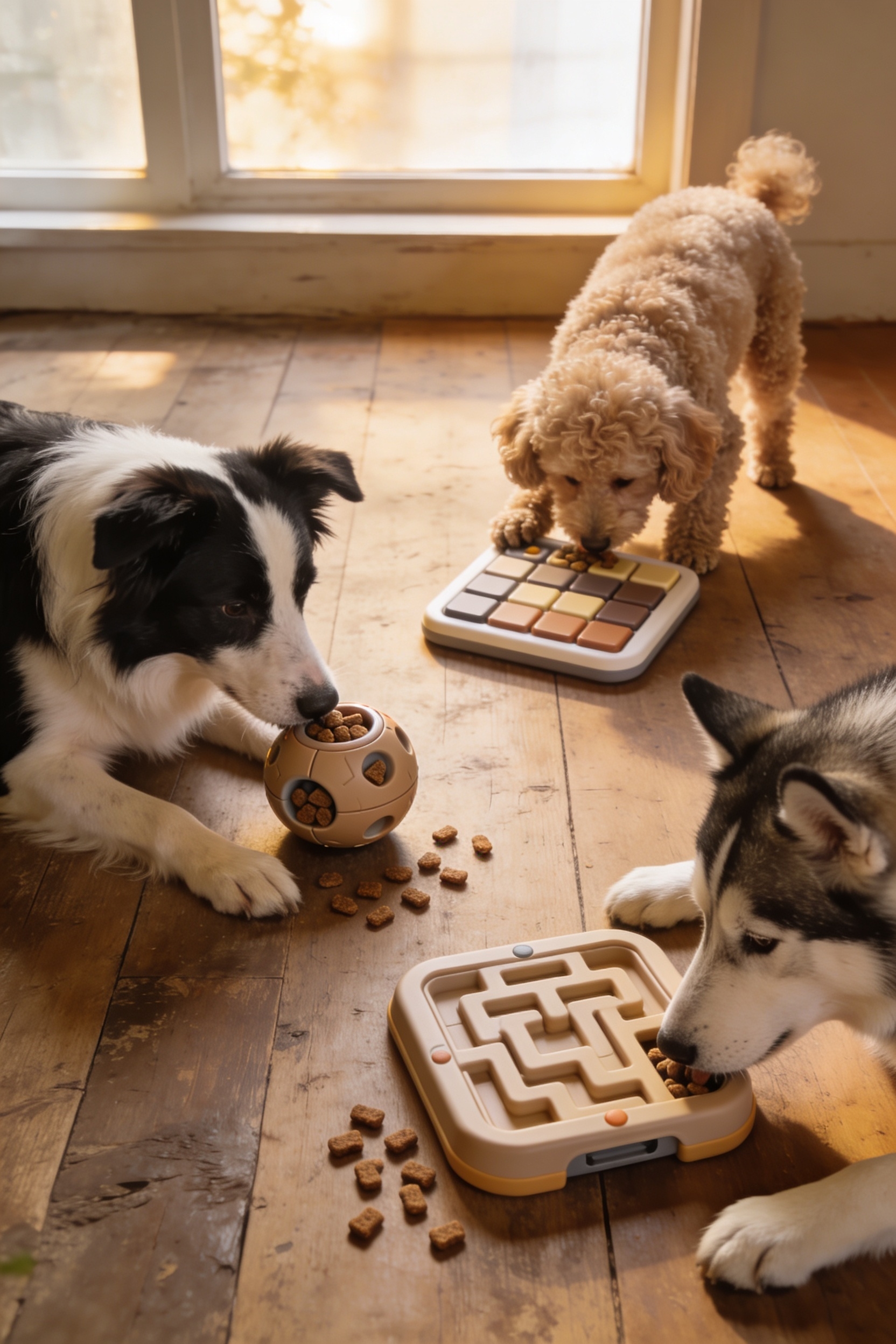


When your dog’s been gnawing on your couch like it owes them money, it’s tempting to think they’re just being a jerk—but I’m sure you’ve noticed that the destructive behavior usually happens when they’re bored out of their skull or stuck alone for hours. Here’s the thing: destructive chewing isn’t really misbehavior at all. It’s your dog basically saying their brain needs a workout. Understanding the behavioral triggers—like under-stimulation, excess energy, or anxiety—helps you see that cognitive toys aren’t just toys. They’re solutions. I mean, instinct fulfillment through mental engagement actually redirects natural chewing and problem-solving urges toward something productive instead of your furniture. That’s honestly the whole game right there. Research from veterinarians shows that textured surfaces on durable chew toys can promote dental health while keeping your dog mentally occupied during solo play sessions.
Recommended Products

COST-EFFECTIVE 3 PACK WITH MULTIPLE OPTIONS: This 3-pack of dog chew toys provides great value for multi-dog households or as convenient replacements; choose 6/9-pack for even better value. These durable dog toys make a perfect gift for your furry friend, ideal as practical chew toys for dogs and long-lasting dog bones.

Stop Wasting Money on 2-Minute Toys: Engineered for the crushing jaw pressure of 20-80 lb breeds like Labs and German Shepherds, this dual-material bone features a rock-solid nylon core reinforced with a dense rubber sleeve to outlast standard plush toys and finally give you a break from constant replacements

BUILT FOR POWER CHEWERS WHO DESTROY ORDINARY TOYS: Designed for dogs that quickly tear through plush, rubber, and softer chew toys. Made from durable nylon to provide a longer-lasting chewing outlet for strong jaws and determined chewers
Does Your Dog Show Signs of Under-Stimulation?

Most dogs showing signs of under-stimulation are basically walking around with a neon sign on their heads saying “I’m bored, please destroy something,” and honestly, you’ve probably already spotted it in your own place.
Now, here’s what I mean—destructive chewing often isn’t your dog being a jerk. It’s your dog screaming for mental engagement through the only language they’ve got. You’ll catch their attention signals pretty quickly: constant pacing, that hyperactive energy burst around 3 p.m., or excessive barking that makes you want to hide. Their play cues might look like they’re literally begging you to give them *something* to do.
All right, if you’re seeing these patterns, your dog isn’t broken. They’re just understimulated. Interactive puzzle toys provide the mental stimulation and extended playtime that can transform destructive behaviors into engaged, problem-solving play sessions. Cognitive toys fix that.
Four Toy Types for Destructive Chewing
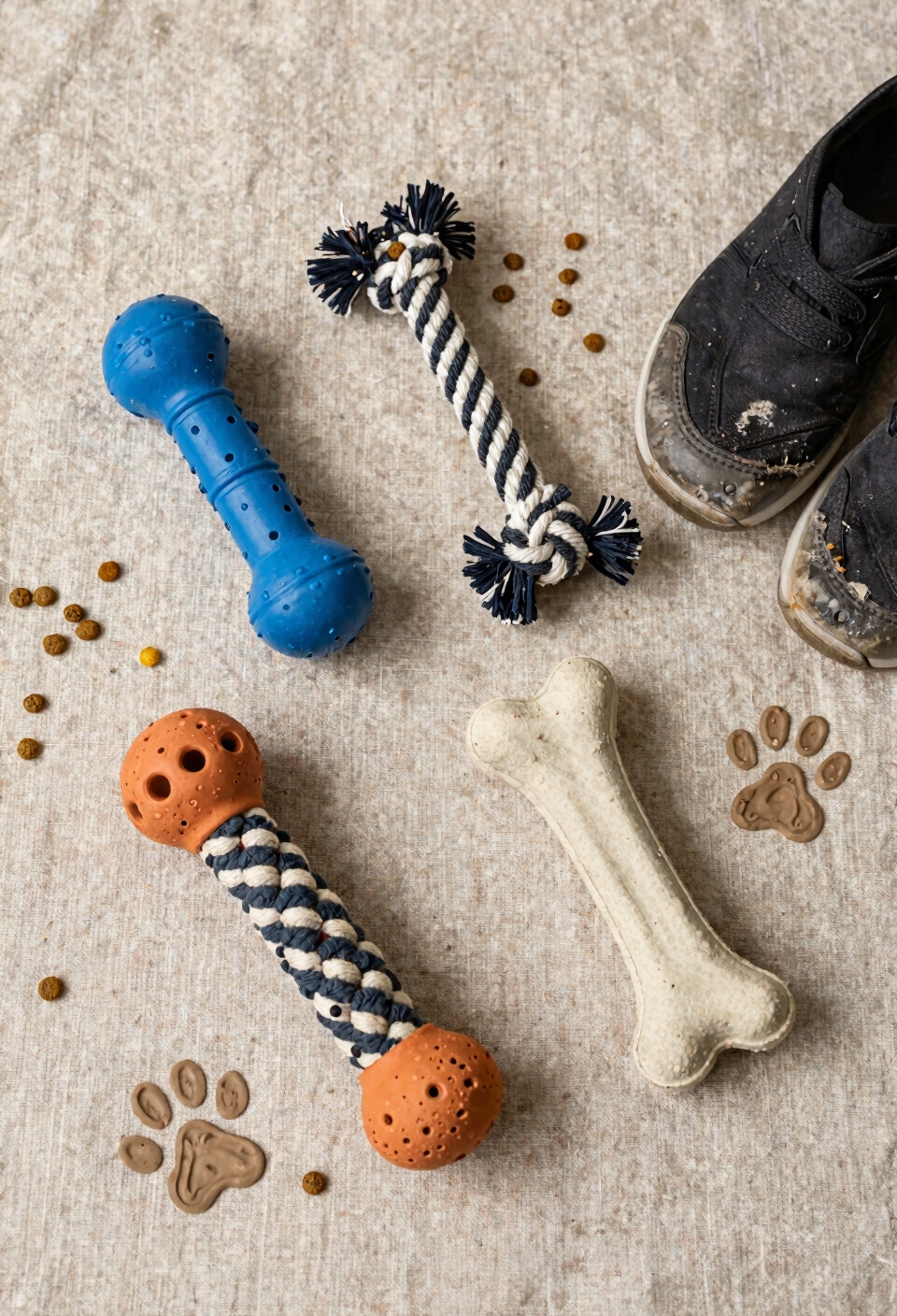
Since your dog’s already decided your furniture’s fair game, it’s time to introduce them to toys that actually scratch that destructive itch in a way that doesn’t involve your couch. I’m sure you’ve noticed that not all toys are created equal—some fall apart faster than your willpower at a donut shop.
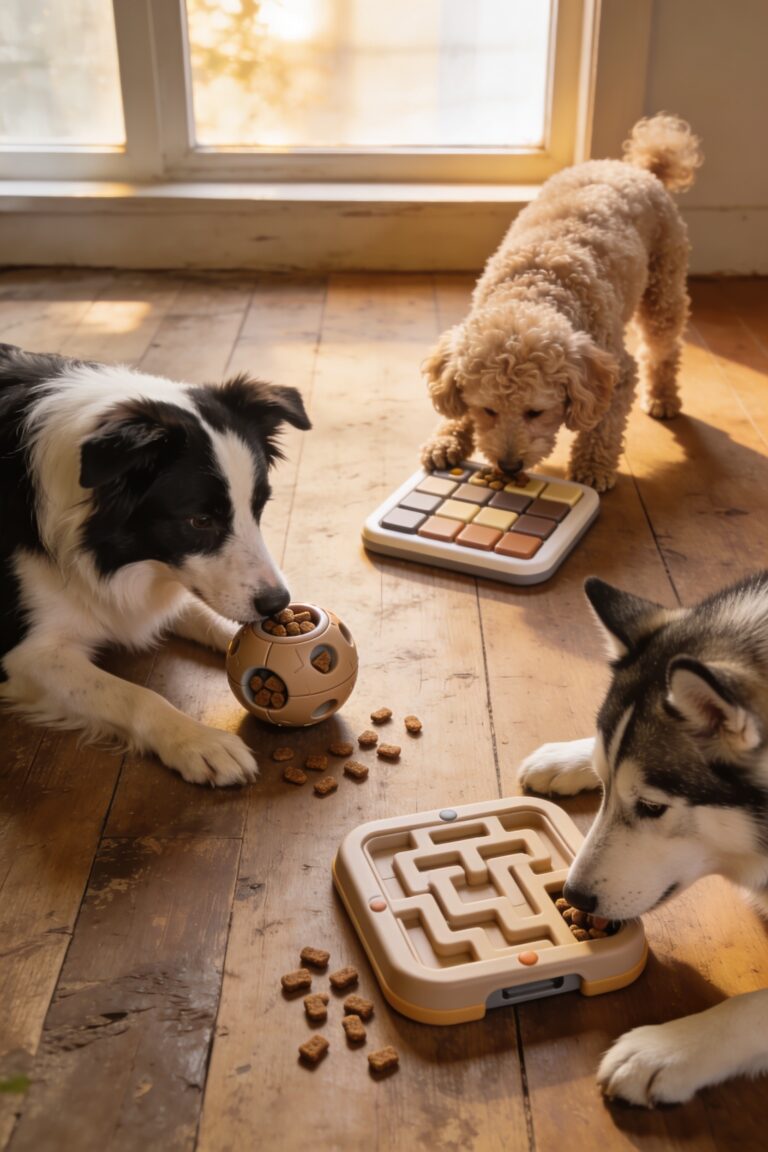
All right, here’s what works: treat-dispensing toys keep your dog problem-solving instead of destroying. Puzzle toys with hidden compartments? They’re basically brain games in rubber form. Wobble-and-roll toys add motion that demands focus and coordination. Now, chewable puzzle toys combine durable materials with treat-holding features—they’re like the Swiss Army knife of enrichment. The Starmark Bob-A-Lot exemplifies this dual functionality by serving as both a treat-dispensing puzzle and a slow feeder that aids digestion.
Don’t sleep on DIY options either. Interactive tug toys work great for play sessions, while scent trails hidden in puzzle boxes tap into your dog’s natural foraging instincts. Your couch’s got a fighting chance now.
Recommended Products

Dog Puzzle Toy – Level 1 Beginner: Perfect for puppies and dogs new to puzzles, this Nina Ottosson dog puzzle introduces treat-dispensing fun and enrichment

[Treat Distribution] Our food dispenser has differently sized spheres at both ends. As dogs push the toy, it moves within a fixed area, allowing dogs to continuously chase and play with it. During movement, food is dispensed from the food holes on both sides of the toy.

Double the Snoop, Double the Fun: Durable treat-dispensing dog toy that erratically releases treats from two ends; this interactive puzzle toy dispenses treats as it rolls and bounces, promoting active play and problem-solving skills. Note: the size of the treats or kibble determines the flow - smaller pieces release more at once and come out faster.
Best Materials for Durable Puzzle Toys
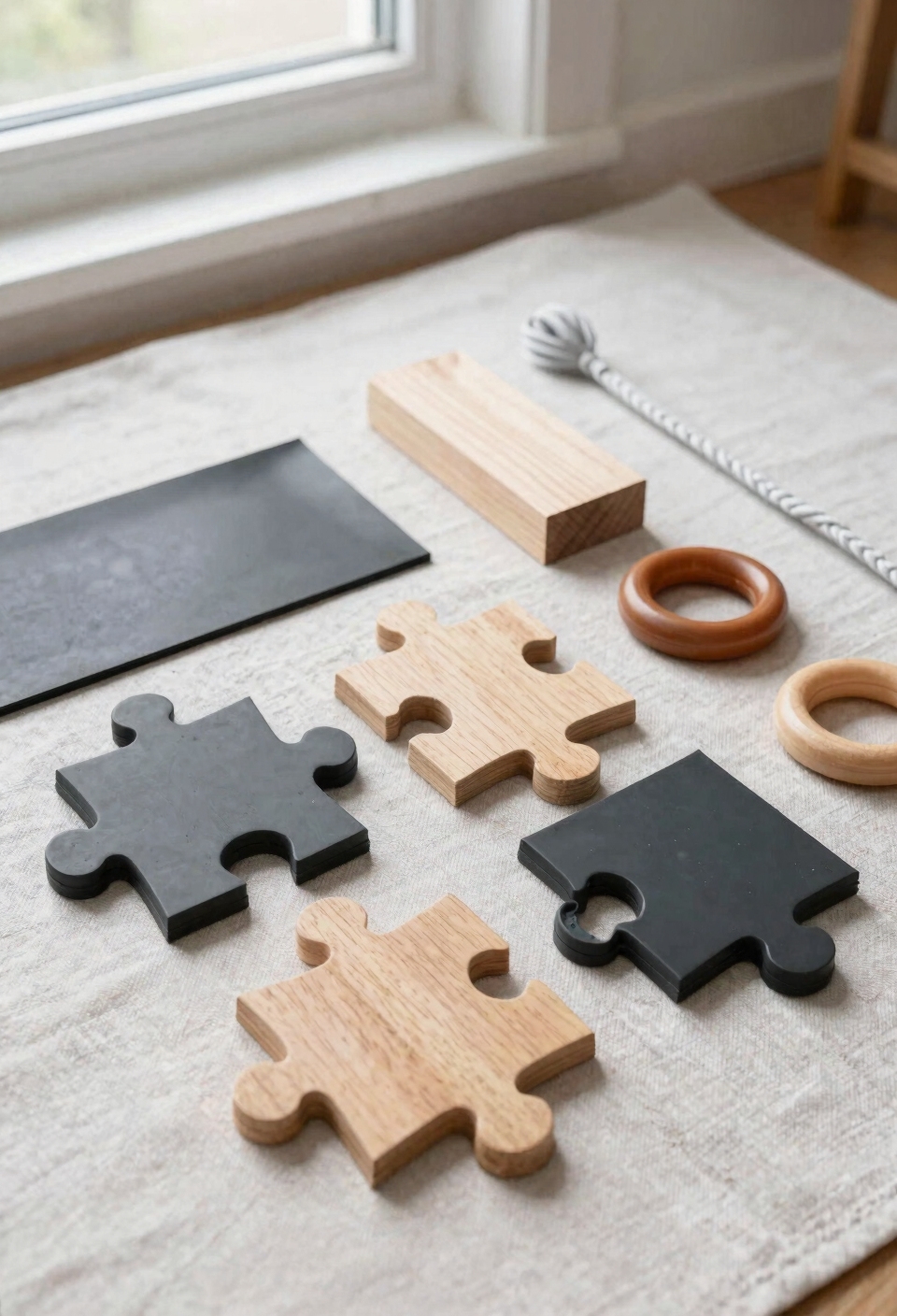
Now that you’ve got the right toy types in your arsenal, here’s the thing—a puzzle toy’s only as good as the material it’s made from, because I’m sure you’ve noticed that your dog’s teeth are basically tiny demolition equipment. Look, I’m partial to reinforced thermoplastic for serious chewers. It holds up like nobody’s business. Medical grade silicone is another solid choice—it’s safe, it bounces back, and honestly, it feels like it was engineered specifically to frustrate destructive dogs (in the best way). Thick rubber works too, though it’ll eventually succumb to determined gnawing. The key is texture and density. You want something that keeps your pup engaged without shredding into dangerous splinters. Natural rubber toys with treat-dispensing features excel at combining durability with mental stimulation for aggressive chewers. Skip the flimsy stuff—your furniture will thank you.
How to Roll Out Cognitive Toys Successfully
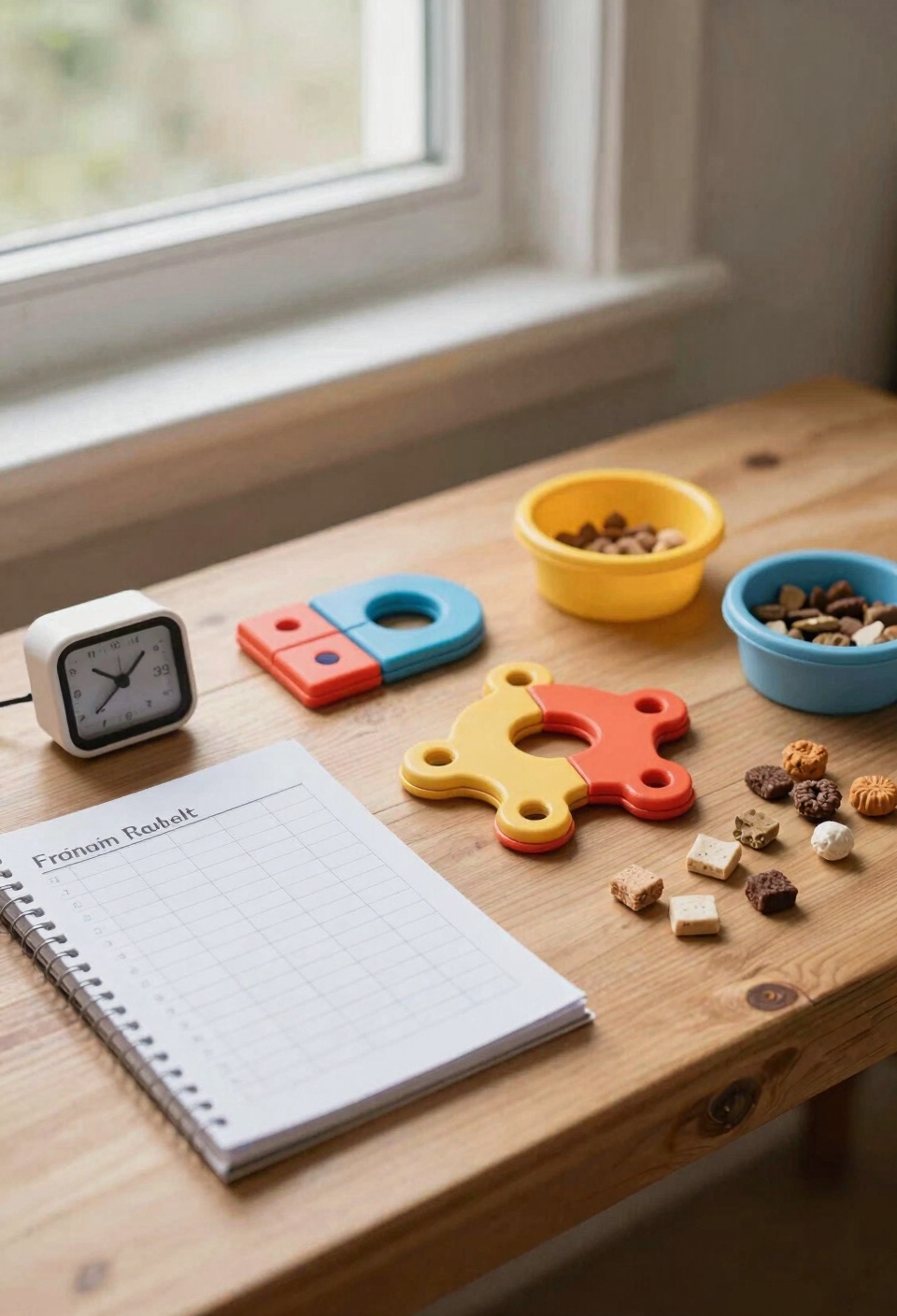
With the right durable toy in your hands, here’s where most people mess up—they just toss it on the floor and expect their dog to suddenly become a puzzle-solving genius. I mean, it doesn’t work that way.
Your gradual introduction matters way more than you’d think. Start by showing your dog how the toy actually works. Do some owner demonstration yourself—manipulate those compartments, get treats falling out, make it look genuinely fun. Your dog’s watching you, not reading the instruction manual. Toys like the KONG Classic Stuffable are designed specifically for this kind of interactive learning where you can demonstrate treat-stuffing and engagement techniques.
Now, don’t abandon them to figure it out solo right away. Sit with them for a few sessions. Once they catch on, you can step back. This slower rollout prevents frustration and actually teaches them the game’s worth playing. Trust me, patience here pays off big time.
Sustain Results: Rotate Toys, Exercise, and Training Together
Getting your dog hooked on a puzzle toy is half the battle—I’m sure you’ve noticed that initial excitement wears off fast if you don’t keep things fresh. Toy rotation is your secret weapon here. Swap out toys every few days so your dog treats each one like it’s brand new again. I mean, we’d get bored too if we played with the same puzzle for weeks straight.
Now, cognitive toys alone won’t cut it. You’ve got to combine toy rotation with solid daily exercise and joint training sessions. Think of it this way: a tired, mentally stimulated dog is way less likely to demolish your couch. Mix puzzle time, walks, playtime, and training together, and you’ll actually see those destructive habits fade. Obviously, consistency matters more than perfection. The best results come when you combine multiple engagement elements like treat dispensing, movement, and varied textures to keep your dog’s mind truly occupied.
Frequently Asked Questions
Can Cognitive Toys Help Dogs With Separation Anxiety or Stress-Related Destructive Behavior?
Yes, I’ve found cognitive toys help manage separation anxiety. They provide enrichment that occupies your dog’s mind, reducing stress-related destruction. Treat-dispensing toys offer stress management by keeping focus on problem-solving during alone time, easing anxiety symptoms effectively.
How Often Should I Replace Worn-Out Cognitive Toys to Prevent Ingestion of Debris?
I’d inspect toys weekly, replacing them when they’re fraying, cracking, or shedding debris. Heavy chewers typically need replacement every 2-4 weeks. Regular debris inspection prevents accidental ingestion and keeps enrichment safe.
Are There Age-Appropriate Cognitive Toys for Puppies Versus Adult or Senior Dogs?
Yes, I’d recommend starting puppies with softer puppy puzzles that develop problem-solving skills gently. For seniors, I suggest slower-paced senior challenges that reduce joint strain while keeping their minds engaged without overwhelming them.
What’s the Cost-Benefit of DIY Puzzle Toys Compared to Commercial Cognitive Toy Options?
You’d think DIY puzzles save money—and they do—but here’s the catch: I’ve found commercial toys offer safety tradeoffs worth considering. DIY value shines for budget-conscious owners, yet durability and non-toxic materials often justify premium pricing.
When Should I Consult a Professional Trainer About Persistent Destructive Chewing Despite Enrichment?
I’d recommend you seek assessment from a professional trainer if destructive chewing persists despite consistent enrichment efforts over several weeks. A behaviorist referral can help identify underlying anxiety or medical issues driving the behavior.
Conclusion
All right, here’s the thing—cognitive toys aren’t just gonna save your furniture from being obliterated into a million pieces, they’re basically magic for bored dogs. You’ve gotta rotate them, exercise your pup, and keep training going, or you’re basically back to square one. I’m sure you’ve noticed that a mentally stimulated dog is infinitely happier. Now get out there and transform that furry demolition expert into a puzzle-solving genius.