As an Amazon Associate, we earn from qualifying purchases. Some links on this site are affiliate links at no extra cost to you. Our recommendations are based on thorough research and editorial judgment.


Best Training Toys for Cats: Yes, Cats Can Be Trained Too

I’m sure you’ve noticed your cat ignoring a toy mouse one day and attacking it the next—that’s not laziness, that’s actually your cat’s brain telling you something essential about training. Here’s the thing: cats are totally trainable when you use toys that trigger their natural hunting instincts. Wand toys, balls, and motorized gadgets work best because they tap into that hardwired stalk-chase-pounce sequence. All right, pair those with clicker training and you’ve got the formula for teaching real behaviors. Want to know which specific toys work best and how to avoid the common mistakes that derail progress?
Key Takeaways
- Wand toys with replaceable attachments and interactive balls maintain engagement by mimicking cats’ natural prey-sequence behaviors.
- Clicker training marks desired behaviors precisely, enabling immediate rewards that accelerate learning and strengthen the human-cat bond.
- Puzzle toys and treat dispensers combine play with problem-solving to increase mental stimulation and training motivation.
- Motion-activated electronic balls provide autonomous play that satisfies hunting instincts when human participation isn’t available.
- Rotate toys and take breaks from familiar ones to prevent reward fading and maintain consistent training progress.
Why Your Cat’s Hunting Instincts Drive Training
You may be interested

Now, here’s where prey sequence mapping comes into play. Cats have this hardwired sequence: stalk, chase, pounce, capture. Training toys that mimic these steps keep your cat engaged because they’re literally doing what they were born to do. I mean, you’re not fighting nature here—you’re partnering with it. That’s why interactive play strengthens your bond *and* motivates training. Incorporating motion-activated electronic balls into your training routine provides autonomous play that satisfies their hunting instincts even when you’re not actively participating.
The Best Toy Types for Teaching Cats New Behaviors
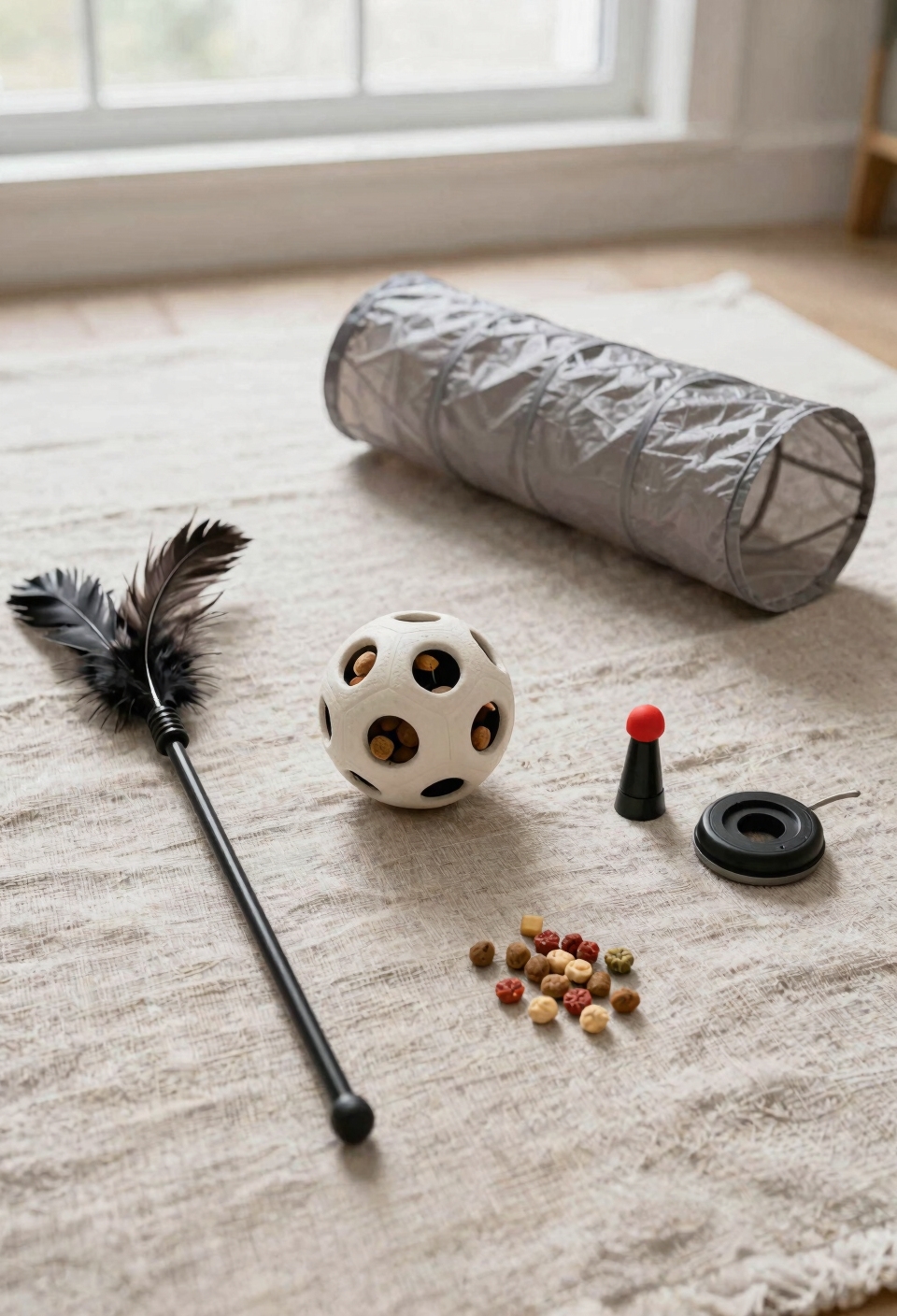
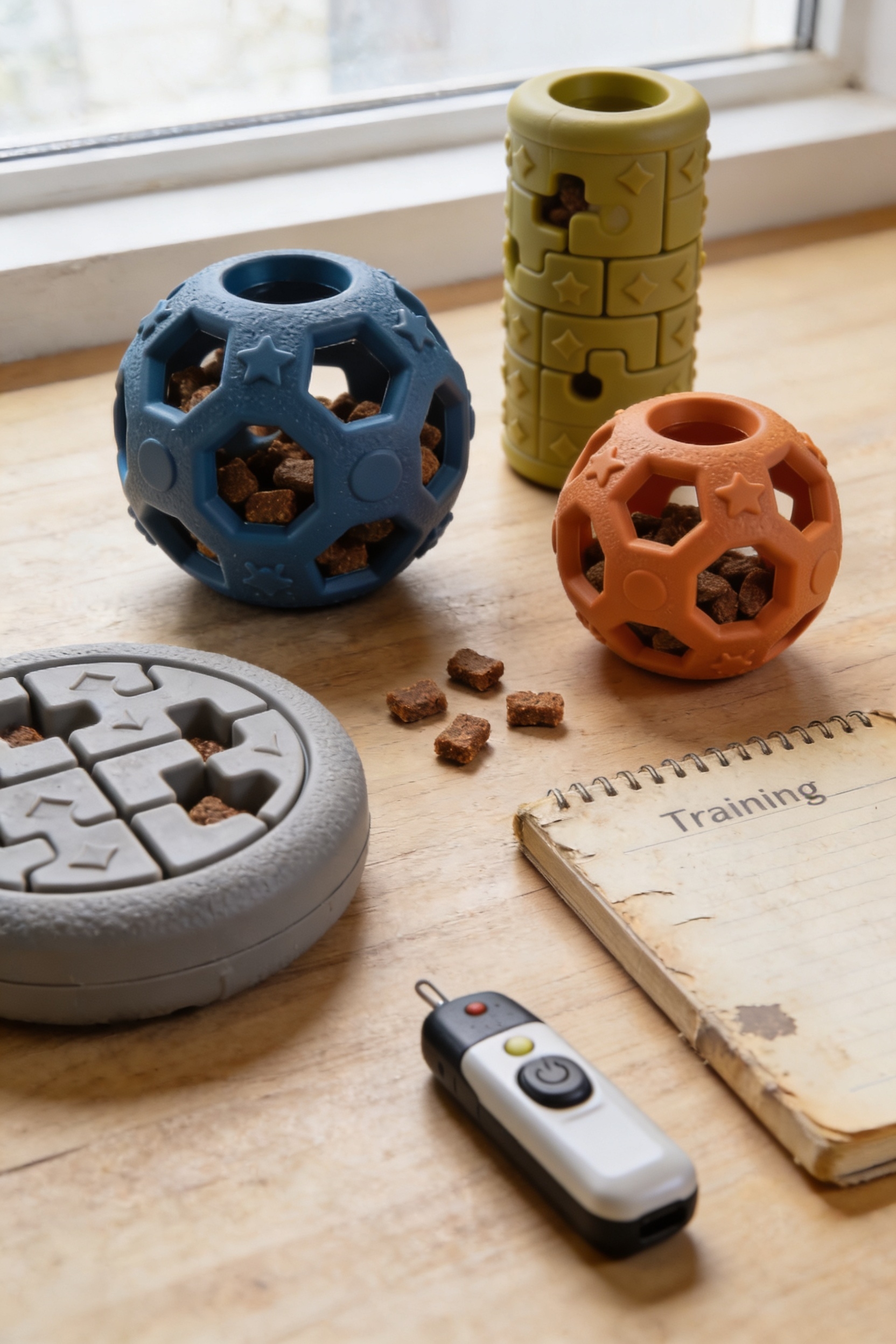
Since you’re already working with your cat’s natural hunting sequence, the next step is picking the right tools for the job. I’m sure you’ve noticed that wand toys with replaceable attachments—feathers, felt, cardboard—keep things fresh and exciting. Now, balls in various styles, from jingle to crinkle, let your cat bat and chase independently. All right, here’s where it gets interesting: laser pointers create scent trails of movement that tap into that predatory drive hard. Puzzle toys and treat dispensers combine play with problem-solving, which honestly, keeps cats more engaged than you’d expect. Motorized toys work too if you want hands-free entertainment, particularly rechargeable interactive toys that combine physical activity with mental stimulation through multi-sensory engagement. The key is rotating your arsenal. Obviously, what works today might bore them tomorrow, so mix it up and watch your cat stay motivated.
Recommended Products

Interactive Level 2 Cat Puzzle Toy: 13" x 9.5" cat puzzle feeder that triggers natural hunting and foraging instincts. Level 2 adjustable difficulty for beginner to advanced cats.

Interactive Cat Treat Puzzle: A fun and engaging cat puzzle feeder designed to stimulate natural foraging and hunting instincts in cats, kittens, and pets with hide and seek treat-finding fun

Enrichment: Watch your cat's natural instincts come alive as they chase the SlimCat across the floor. This interactive toy provides mental stimulation and enrichment, keeping indoor cats engaged and reducing boredom.
Cat Training Techniques: Clickers, Recall, and Tricks

Once you’ve got your cat’s attention with the right toys, it’s time to actually teach them something—and that’s where clicker training comes in. I’m sure you’ve noticed how a quick clicking sound can mark the exact moment your cat does something right. That’s your signal to reward them immediately.
Now, here’s where targeted shaping helps. You’re basically breaking down tricks into tiny steps, rewarding each one until your cat nails the full behavior. Start with something simple like sit, then gradually build from there. Interactive toys featuring sound and movement elements can further enhance engagement during training sessions by triggering your cat’s natural hunting instincts.
All right, marker fading is when you eventually phase out the clicker as your cat gets the idea. Once they understand what “sit” means, you won’t need the click anymore. Teaching recall? Same principle—reward them for coming to you every single time, and watch how quickly they learn.
Training Safety: Rules for Injury-Free Play Sessions
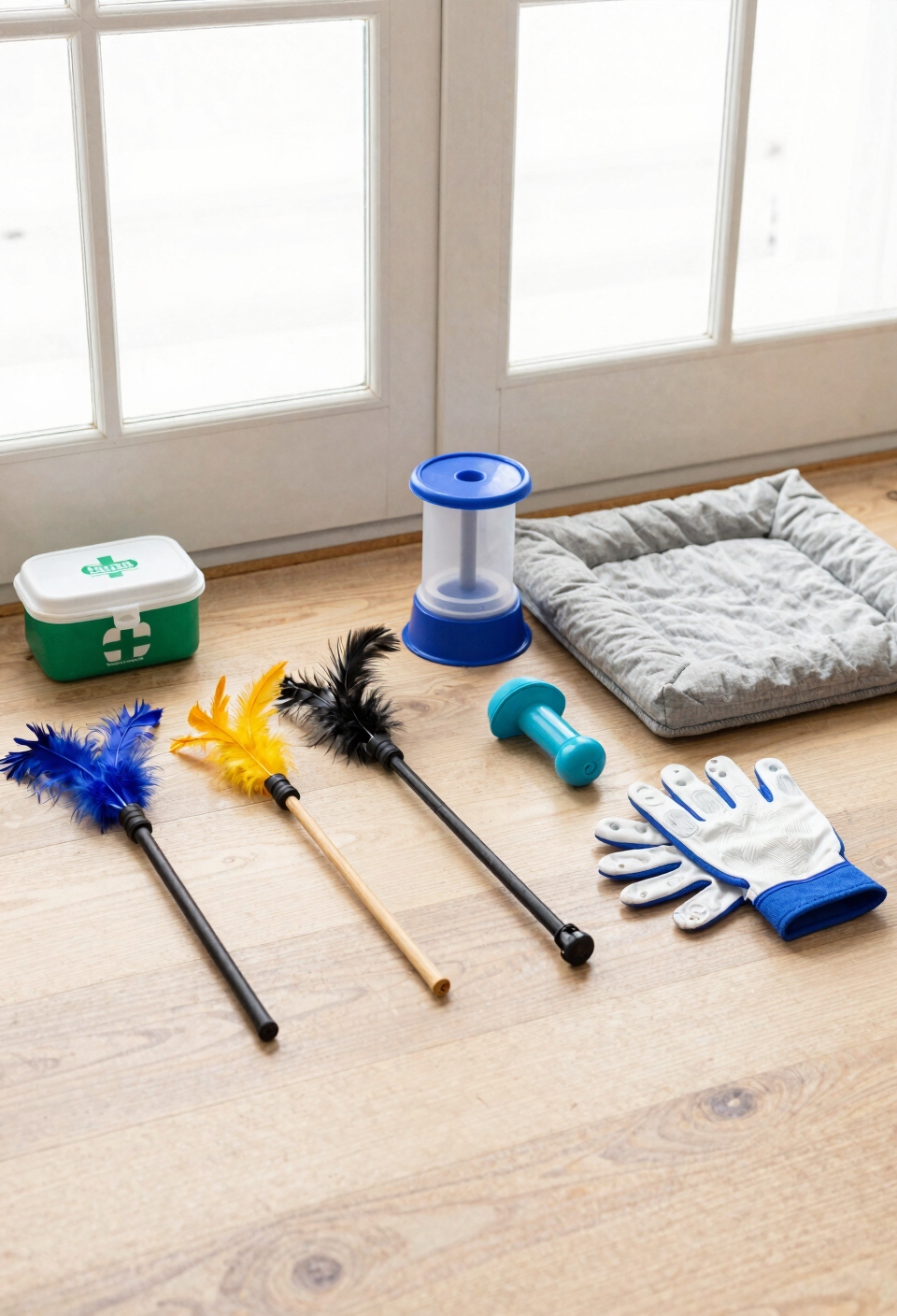
All the training breakthroughs in the world don’t mean much if your cat ends up with a string wrapped around their digestive tract—which, I’m sure you’ve noticed, is not the vibe we’re going for. Here’s the thing: wand toys and fishing-pole toys are genuinely fantastic for training, but they’re also basically cat kryptonite if left lying around unsupervised. You need solid supervision protocols whenever strings are involved. I mean, string ingestion isn’t some rare freak occurrence—it’s legitimately dangerous.
Before each play session, do quick equipment inspections. Check for fraying, loose attachments, and wear. Unlike toys designed with reinforced seams and solid construction, string-based toys require extra vigilance to prevent breakage and ingestion hazards. Keep your hands clear of the toy’s end during active play to avoid accidental bites. And obviously, never leave string-based toys accessible when you’re not watching. Your cat’s digestive system will thank you.
Troubleshoot Common Training Setbacks and Restart Progress

Even when you’ve got the best toys and the most solid safety protocols in place, sometimes your cat just… stops cooperating. I’m sure you’ve noticed this happening right when you thought you’d nailed the training thing. Now, reward fading is usually the culprit—your cat’s basically saying, “Yeah, I’ve seen this toy a thousand times, buddy.” The fix? Slow reintroduction of novelty. Swap out attachments, rotate different toy types, and honestly, take a break for a few days. Sometimes your cat needs to forget about that wand toy before they’ll care again. Consider rotating natural wool balls into your toy lineup, as their silent texture and varied tactile experience can reignite engagement when other toys have lost their appeal. All right, when you restart, keep sessions shorter and dial back expectations. Your cat didn’t forget how to train—they just got bored. And I mean, can you blame them?
Frequently Asked Questions
How Often Should I Rotate My Cat’s Toys to Prevent Boredom and Maintain Engagement?
I’d recommend doing a weekly rotation of your cat’s toys to keep things fresh. I also suggest incorporating seasonal themes periodically. This approach maintains novelty, prevents boredom, and keeps your cat engaged with their playthings.
Can I Use Household Items Like Cardboard Boxes as Training Enrichment Tools?
Yes, you can absolutely use cardboard boxes as training enrichment. I’ve found that box hideaways and cardboard puzzles engage your cat’s natural instincts affordably. They’re perfect low-cost enrichment tools that satisfy hunting and hiding behaviors effectively.
What’s the Minimum Age at Which Kittens Can Safely Begin Toy-Based Training?
I’d recommend starting around 8-12 weeks old when kitten reflexes develop fully. Early socialization through gentle toy play builds confidence and coordination while strengthening our bond during this critical developmental window.
How Long Should Typical Training Sessions Last Before My Cat Loses Interest?
I’ve found that short bursts of 5-10 minutes work best before your cat loses interest. I focus on reward timing to keep engagement high—immediate reinforcement after successful behaviors maintains their motivation and enthusiasm throughout the session.
Are There Specific Toy Types Better Suited for Shy or Less-Motivated Cats?
Like a gentle breeze rather than a gust, I’d recommend slow moving wands that won’t overwhelm your shy cat. Scent stuffed toys also work wonderfully—they’re less intimidating and let your cat engage at their own pace.
Conclusion
I’m sure you’ve noticed that training your cat isn’t about forcing them into submission—it’s about unleashing the brilliant hunter already sleeping on your couch. You’re fundamentally turning playtime into a bridge between their wild instincts and your living room reality. Now, you’ve got the tools and know-how to transform your feline into a trick-performing superstar. That’s honestly pretty cool.