As an Amazon Associate, we earn from qualifying purchases. Some links on this site are affiliate links at no extra cost to you. Our recommendations are based on thorough research and editorial judgment.

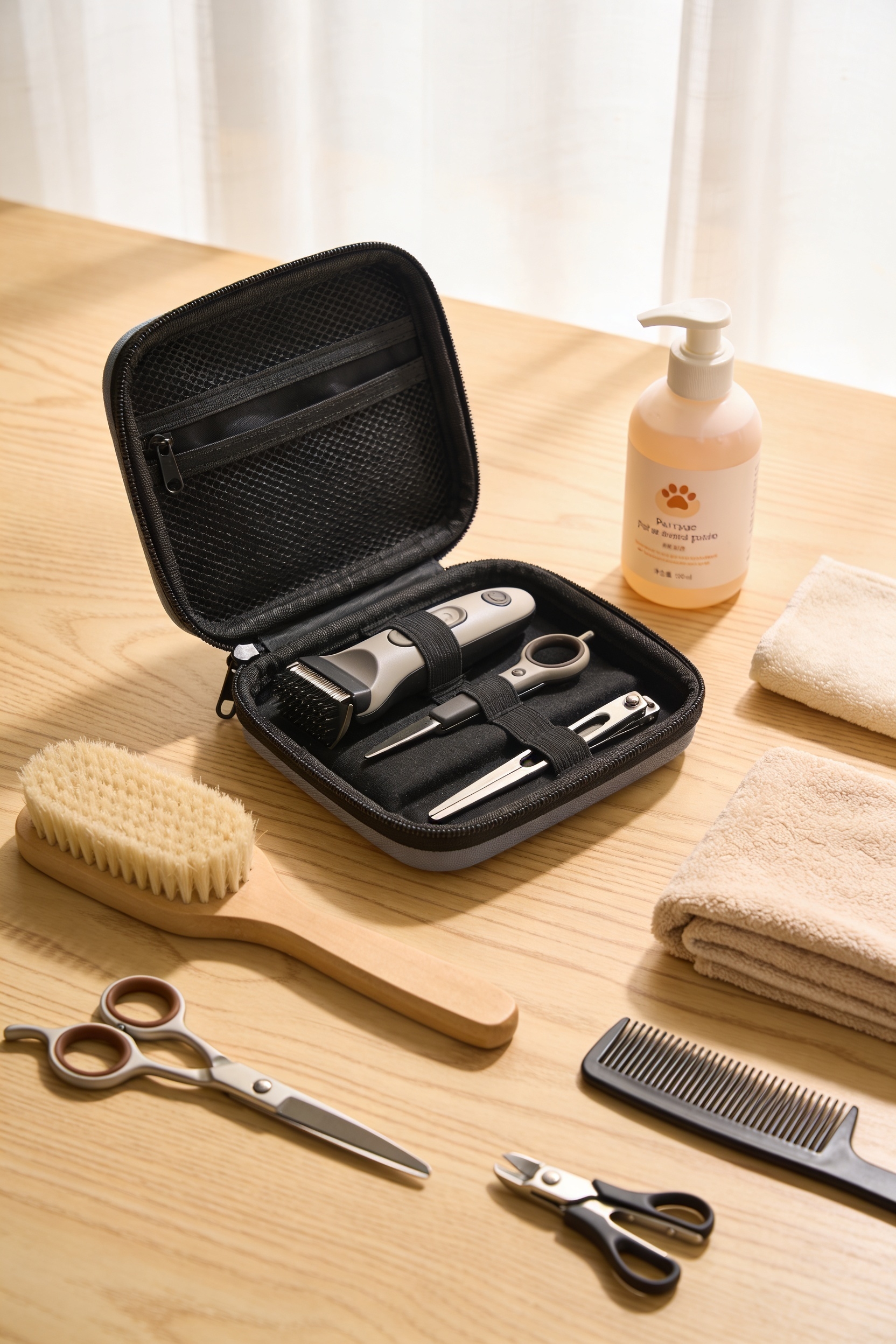
Best Grooming Kit for First-Time Pet Owners

Look, I’m sure you’ve noticed your dog’s looking a bit scraggly—all right, here’s the thing: you don’t need fancy equipment to start. Grab five core tools: slicker brush, pin brush, curry brush, undercoat rake, and medium-toothed comb. Now, match these to your dog’s actual coat type, because that’s where most people mess up. I mean, obviously consistent practice beats expensive gear every time. Add a travel comb for touch-ups, and you’re golden. But here’s where it gets interesting—there’s a whole strategy to keeping cleanup manageable and your pup comfortable throughout the process.
Key Takeaways
- Start with five core tools: slicker brush, pin brush, curry brush, undercoat rake, and medium-toothed comb for most coat types.
- Match your tool selection to your dog’s specific coat type to reduce frustration and ensure effective grooming results.
- Prioritize durable materials like reinforced rubber and high-quality plastics over expensive professional-grade equipment when beginning your grooming journey.
- Consistent practice matters more than having premium tools; focus on developing proper technique with starter-level equipment first.
- Consider vacuum grooming kits to manage loose hair cleanup and reduce manual lint rolling after grooming sessions.
The Complete Grooming Kit First-Time Pet Owners Need
You may be interested

Look, I’m sure you’ve noticed that grooming your pet at home sounds way cheaper than those salon visits—and honestly, it usually is—but the real question is knowing which tools actually belong in your starter kit so you’re not buying a bunch of stuff you’ll never use.
Here’s the thing: a solid cost breakdown for beginners starts with the five essentials—slicker brush, pin brush, curry brush, undercoat rake, and a medium-toothed comb. Now, I’m not saying you need all five immediately, but these cover most coat types without breaking the bank.
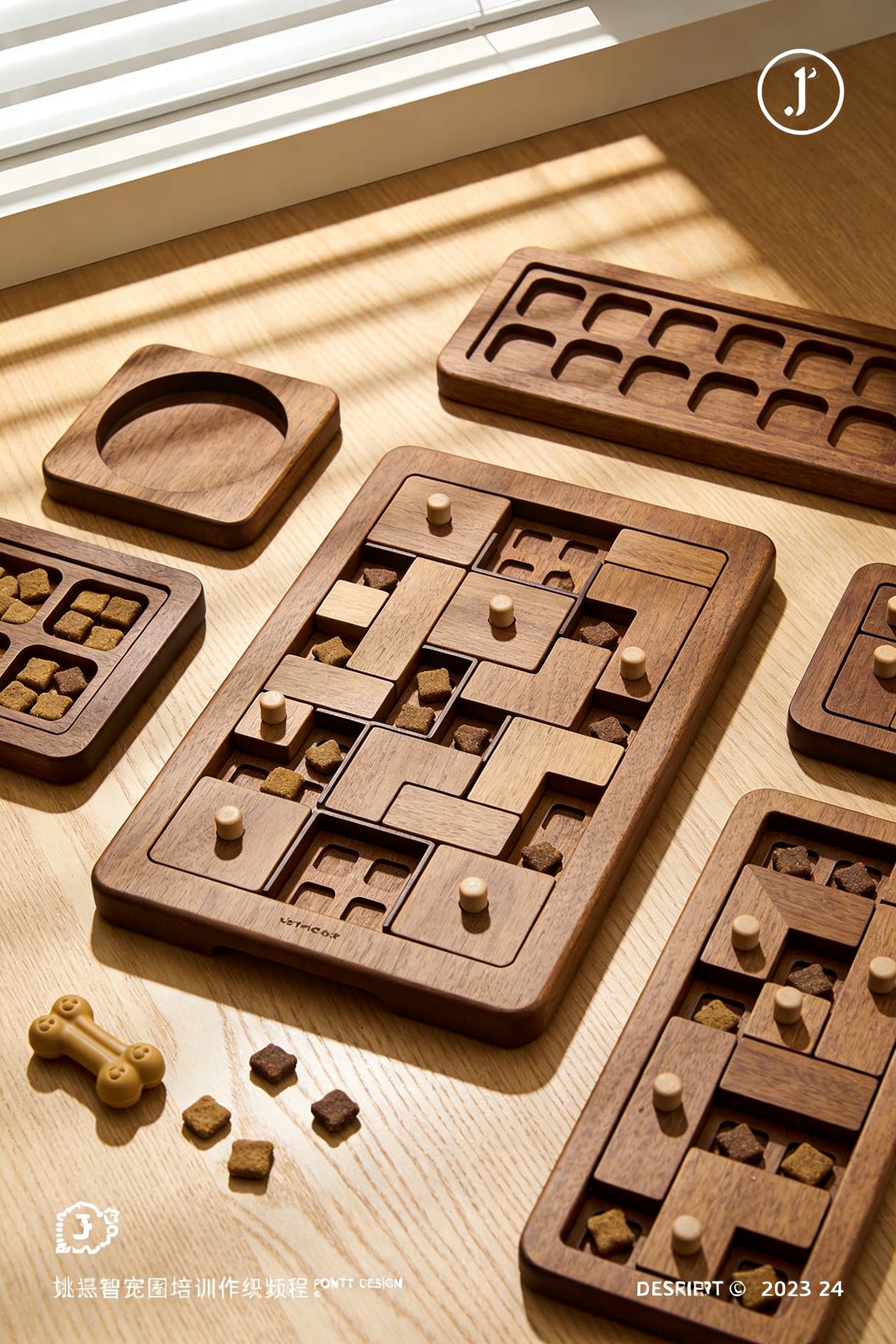
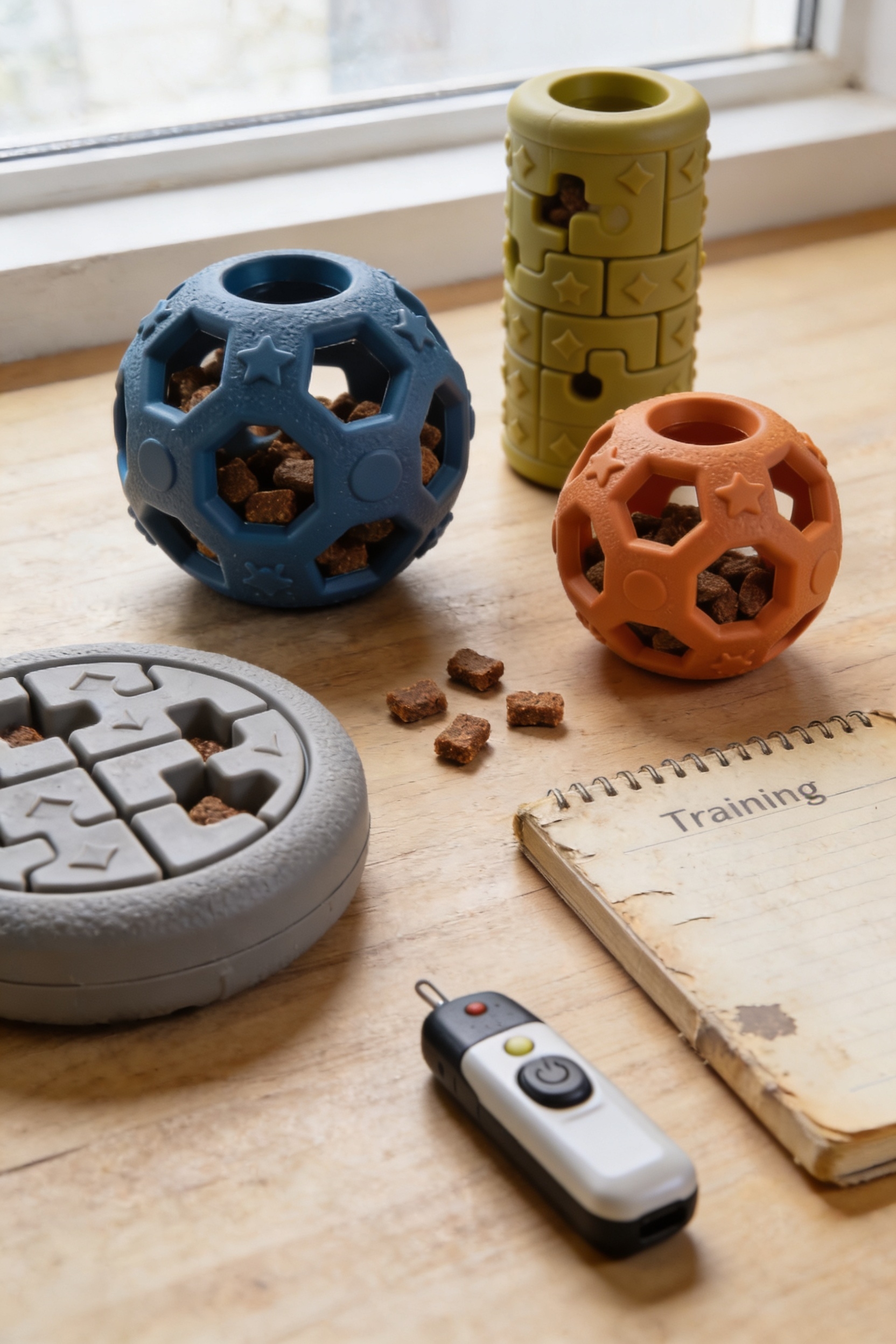
Before you panic about mastering everything, remember your training schedule matters more than having professional-grade equipment. Honestly, starting simple and practicing consistently beats owning fancy tools you’re terrified to use. Just like choosing durable chew toys can reduce destructive behavior in dogs, selecting the right grooming tools prevents anxiety and builds confidence in your routine. You’ll nail this.
Matching Your Dog’s Coat Type to the Right Tools
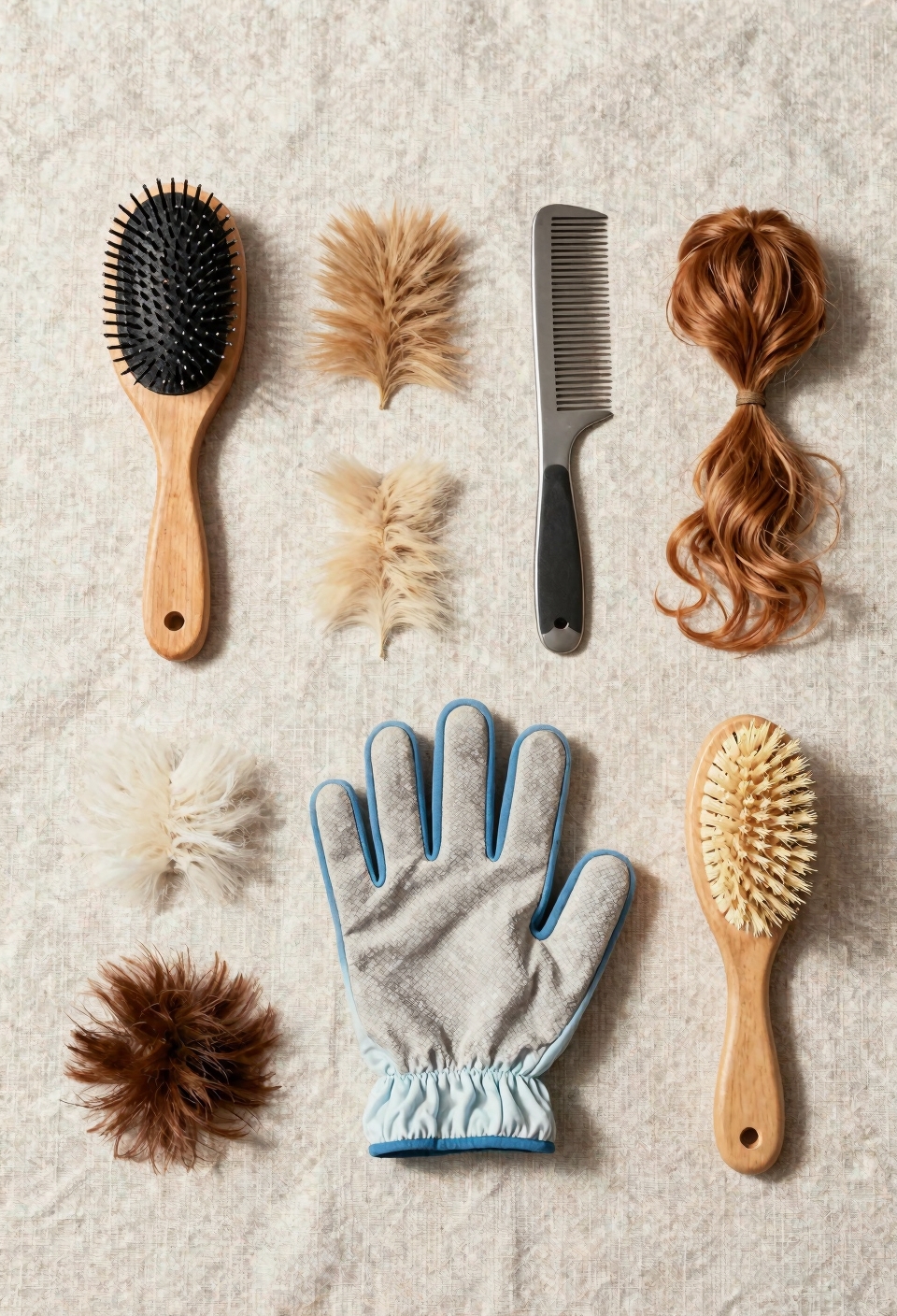
Now that you’ve got your starter essentials lined up, here’s where a lot of first-timers stumble—they’ll grab a pin brush because it looks fancy, then wonder why their short-haired retriever looks like they’ve been attacked by a cat. I mean, coat type genuinely matters.
Your dog’s fur isn’t just about looks—it affects everything from seasonal shedding to skin sensitivity. Short-haired dogs? Curry brushes and de-shedding tools are your friends. Long-haired pups need pin brushes and combs that won’t cause breakage. Double-coated breeds demand undercoat rakes, especially during shedding season when they’re basically shedding a second dog inside your house.
Beyond brushing, regular grooming also supports dental health and gum care when combined with appropriate toys that help maintain oral hygiene during playtime. All right, here’s the real thing: match your tool to what your dog’s actually wearing, and grooming becomes way less frustrating for everyone involved.
Essential Brushes and Combs Every Beginner Should Own
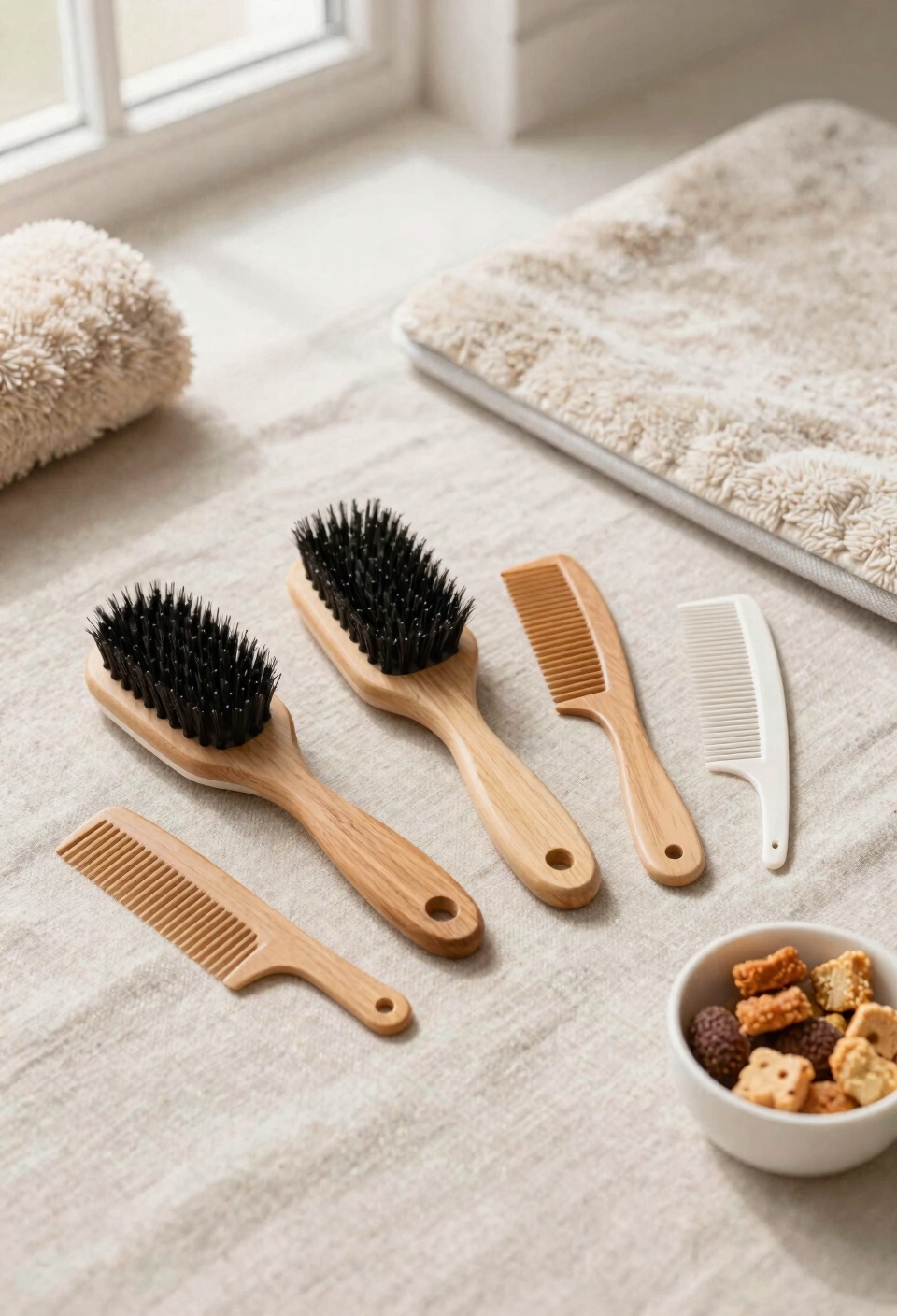
Grab five basic brushes and combs, and you’ve basically solved half your grooming problems before you even start. I’m sure you’ve noticed that different coats need different tools, right? A slicker brush handles loose hair and light tangles on most dogs, while a pin brush works great if you’ve got a longer-haired buddy who tangles easily. The curry brush is your secret weapon for short coats—seriously, it lifts loose fur like nobody’s business. Now, an undercoat rake tackles heavy shedding seasons, especially for double-coated breeds. All right, here’s the thing: grab a medium-toothed comb with good bristle variation for finishing touches, plus a travel comb you can toss in your bag. You’re basically set. Investing in durable materials like reinforced rubber and high-quality plastics ensures your grooming tools will withstand regular use and keep your dog safe during grooming sessions.
Vacuum Grooming Kits That Simplify Cleanup and Storage

Once you’ve got your brushes and combs sorted out, you’ll quickly realize that all those loose hairs you’re collecting? They go *everywhere*. That’s where vacuum grooming kits become your secret weapon. I’m sure you’ve noticed how regular grooming sessions create cleanup chaos—hair on the couch, the floor, basically your entire life. Kits like the Neabot P1 Pro combine brushing and vacuuming in one system, which honestly saves you from becoming a human lint roller.
Now, vacuum maintenance matters because these tools work hard. Keep the filters clean so suction stays strong. For storage solutions, look for kits with organized cases or pouches that keep everything tidy, similar to how electronic pet toys benefit from thoughtfully designed storage that encourages consistent use. You’ll actually use your tools consistently when they’re not scattered across three different drawers. Trust me, I’ve been there.
Guard Combs, Low-Noise Motors, and Ergonomic Handles: Safety Essentials for First-Time Groomers

Because you’re about to be holding a tool that vibrates near your pet’s face and body, safety suddenly becomes way more important than it was when you were just brushing. Guard combs are basically your safety net—they limit how deep the blade cuts, so you won’t accidentally nick your dog’s skin if your hand slips. Now, noise reduction matters too. I mean, imagine a high-pitched whirring sound inches from your pet’s head. They’ll lose their minds. Lower-noise motors keep your dog calmer and actually let you focus instead of wrestling a freaked-out furball. And grip comfort? Honestly, you’ll thank yourself after twenty minutes of holding something that doesn’t feel like a hockey puck. Good handles mean better control, steadier hands, and fewer oops moments. Just like reflective strips and safety features on harnesses help protect dogs during outdoor activities, proper grooming equipment with safety features protects your pet during at-home grooming sessions.
Frequently Asked Questions
How Often Should I Replace Grooming Kit Blades and Attachments for Optimal Performance?
I’d recommend replacing blades every 6-12 months depending on blade wear and usage frequency. Watch for attachment corrosion or dullness—sharper blades work better and reduce pet discomfort during grooming sessions.
Can I Use the Same Grooming Kit Safely on Both My Dog and Cat?
I’d recommend separate kits for your dog and cat to prevent cross-species contamination and potential allergy cross-reactivity. Different coat types require specific tools, and sharing equipment risks transferring allergens or parasites between pets safely.
What’s the Average Learning Curve for First-Time Users With Multi-Tool Grooming Kits?
I’d say you’ll need about 3-5 practice sessions before developing solid muscle memory. Your learning curve depends on user patience and consistent practice sessions. Most first-timers feel comfortable within two weeks.
How Do I Properly Clean and Maintain Grooming Tools to Extend Their Lifespan?
I’ll clean, dry, and store your tools properly. You should sanitize frequently to prevent bacteria, oil blades regularly for rust prevention, and keep everything in a dry case. This extends their lifespan markedly.
Are Beginner Grooming Kits Suitable for Pets With Sensitive Skin or Anxiety Issues?
Yes, beginner kits work well for sensitive pets if you prioritize sensitive-friendly tools like low-noise options and guard combs. I’d recommend anxiety-aware techniques: start slowly, use gentle brushes, and introduce grooming gradually to build your pet’s confidence.
Conclusion
I’m sure you’ve noticed that grooming doesn’t have to feel like wrestling an octopus. Once you’ve got the right kit in your hands—those soft brushes gliding through fur, clippers humming smoothly, vacuum quietly catching every strand—you’ll actually enjoy the ritual. Your pup relaxes, you relax, and honestly, there’s something weirdly meditative about it. Now you’re not just a pet owner; you’re basically a professional. Well, almost.