As an Amazon Associate, we earn from qualifying purchases. Some links on this site are affiliate links at no extra cost to you. Our recommendations are based on thorough research and editorial judgment.

Best Rope Toys for Heavy Chewers That Actually Last

I’m sure you’ve noticed that most rope toys shred faster than tissue paper. Here’s the thing: you need thick-diameter ropes with reinforced ends and tight braids—basically fire-hose style toys that actually stand up to aggressive chewing. Now, matching the rope size to your dog’s bite force matters too. Obviously, supervise those first sessions and inspect regularly for fraying or missing chunks since no toy’s truly indestructible. But if you stick with multi-knotted designs from brands that test for durability, you’ll spend way less on replacements.
Key Takeaways
- Choose thick-diameter ropes with tight braids and reinforced ends to resist aggressive chewing and unraveling.
- Select multi-knotted, fire-hose style toys with solid core construction designed specifically for powerful chewers.
- Inspect toys frequently for fraying, loose knots, and missing chunks; discard immediately when deterioration appears.
- Match rope sizing to your dog’s bite mechanics—medium-to-large diameter balances durability with proper chew engagement.
- Supervise initial chewing sessions to assess durability, then establish a regular replacement schedule for safety.
Why Rope Toys Fall Apart So Fast
You may be interested
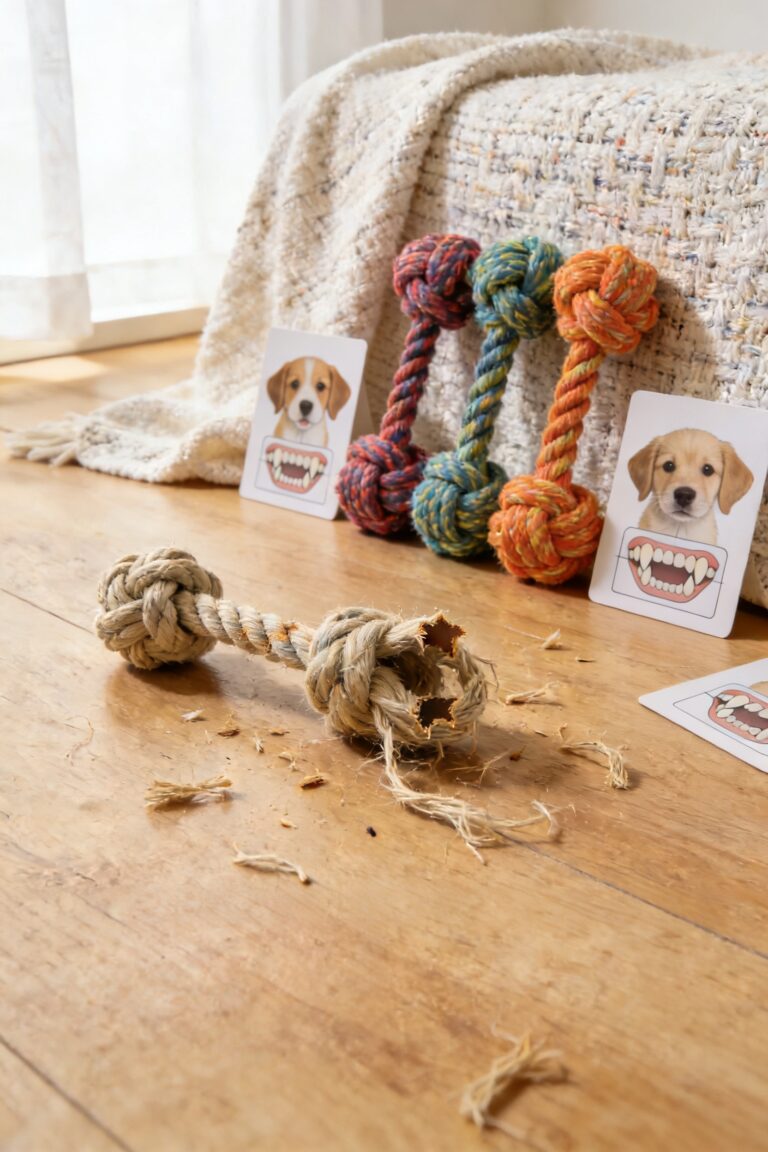
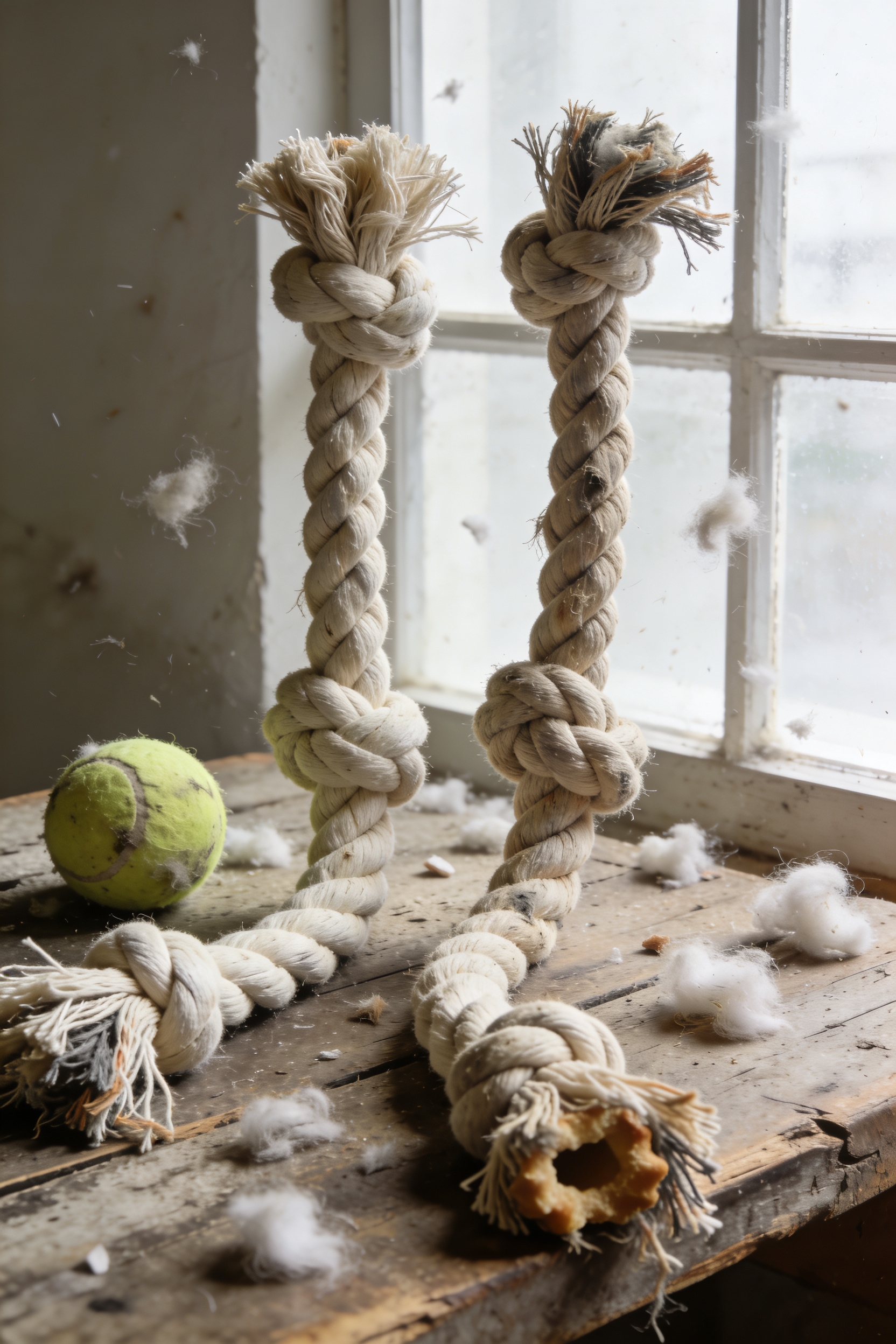
All right, so here’s the thing about rope toys—they fall apart *fast*, and I’m sure you’ve noticed this if you’ve ever owned a heavy chewer. The problem comes down to fiber fatigue. Every time your dog chomps down, those braided fibers break apart a little bit more. Eventually, the whole thing just unravels like a sweater with a loose thread.
Manufacturing defects don’t help either. Some rope toys ship with weak knots or loose braiding right out of the box, which basically guarantees failure within days. Even worse, thin-diameter ropes fail faster because there’s less material to destroy before the toy completely falls apart. Unlike durable alternatives made from industrial-strength nylon and natural rubber, rope toys lack the reinforced construction needed to withstand aggressive chewing. You’re basically watching your money shred in real time.
Recommended Products

2 Pack XL Dog Rope Toy: Design for large dogs and aggressive chewers, consists of 2 durable XL rope toys, 27 inches of 4 knots and 20 inches of 5 knots

Safe and Harmless: Dog chew toys are made of high quality cotton material, no odor and chemical dyes, environmentally friendly and healthy, safe and harmless, gentle to your dog's mouth, sturdy and soft dog toys give your dog a comfortable chewing sensation, your pet can feel free to chew and play.

Strong and durable material: The rope is made of cotton material, thick in quality and can be used for cleaning, safe and durable; It can chew on the rope to help reduce wear and tear on furniture
Rope Construction Features That Resist Aggressive Chewing
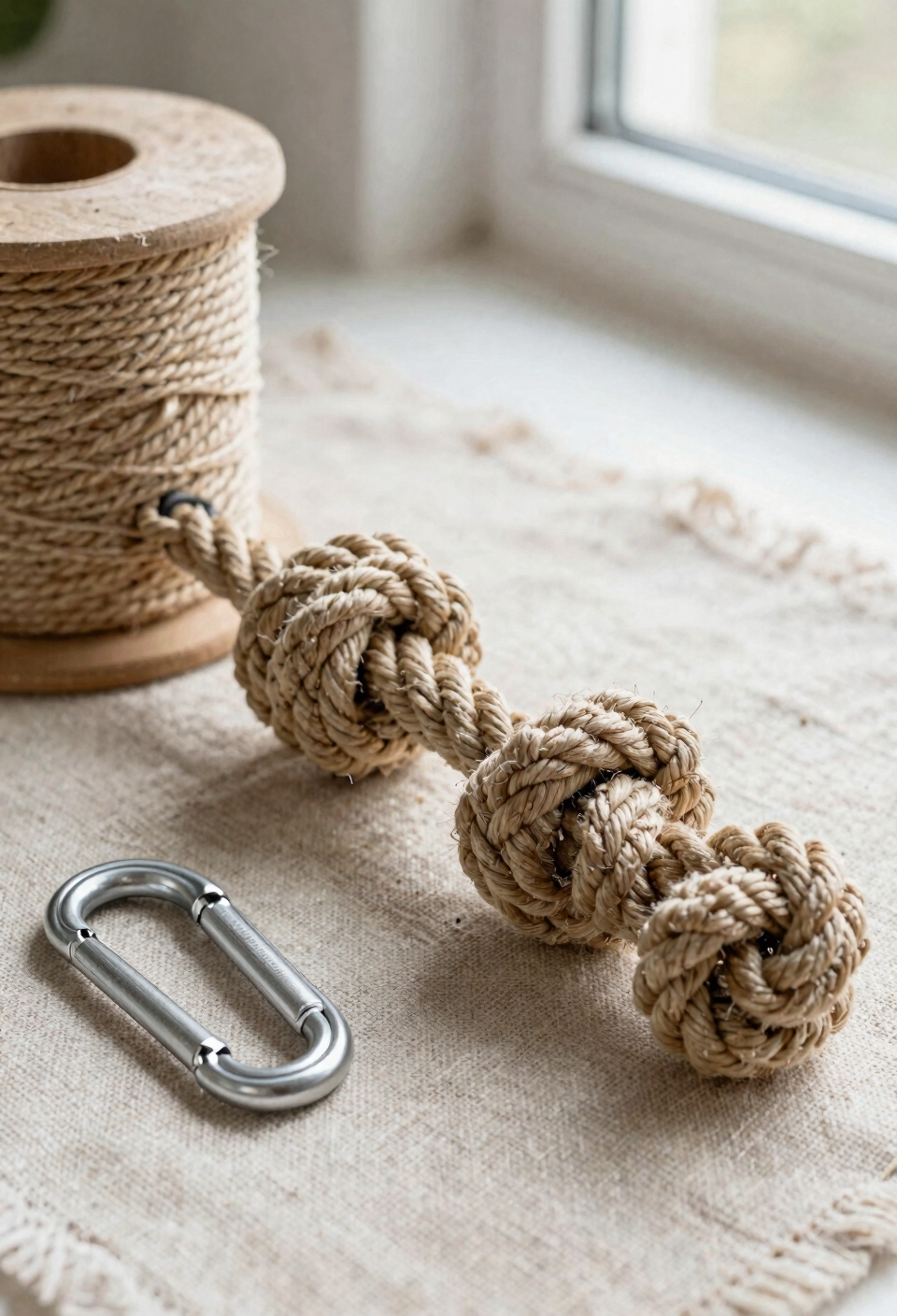
So here’s where rope construction actually *matters*—because not all braids are created equal, and the difference between a toy that lasts a week and one that survives a month comes down to how that rope is actually built.
You want tight braids. I mean, really tight. Loose weaves unravel faster than my attempt at explaining quantum physics, and once those fibers start separating, you’re watching your dog’s toy basically self-destruct in real time.
Reinforced ends matter too—they’re where most toys fail first. Multiple knots instead of one wimpy knot? That’s your best friend. All right, combine that with thick diameter rope, and you’ve got something that actually stands a fighting chance against a genuine power chewer.
The 100% natural cotton construction found in heavy-duty rope toys offers dental health benefits through the fibers’ natural action in cleaning teeth and preventing plaque accumulation during extended chewing sessions.
Recommended Products
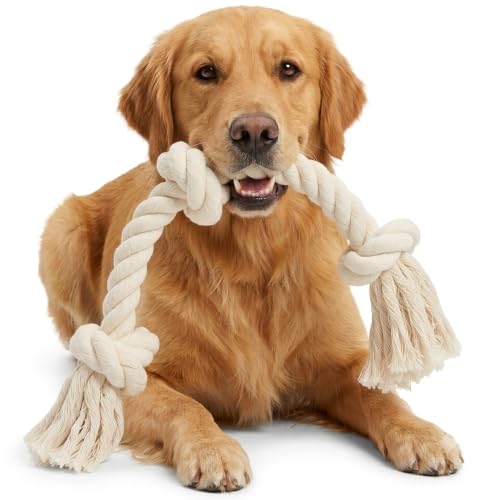
PREMIUM QUALITY AND SAFE MATERIAL: Barida dog rope toys are made of premium 100% cotton and doesn’t contain chemical ingredients. Undyed natural white color rope dog toys are safe for dogs teeth cleaning, safe for interactive dog games and it is washable. Our difference from others is healthy and non toxic dog rope toys that do not contain chemical colorants and contain pure undyed 100% cotton at every stage of the product.

1️⃣ Safe & Natural Cotton. Undyed, non-toxic cotton that’s gentle on teeth and easy to spot clean.
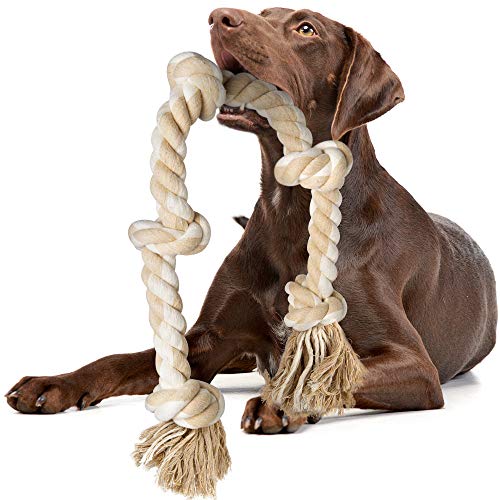
【Most Safe Dog Rope Toy】 - Our rope dog toy is made of 100% natural washable cotton, It’s safe for your pet to chew and play daily. We always keep pets healthy as the first purpose.
Sizing and Thickness: Why Bigger Isn’t Always Better
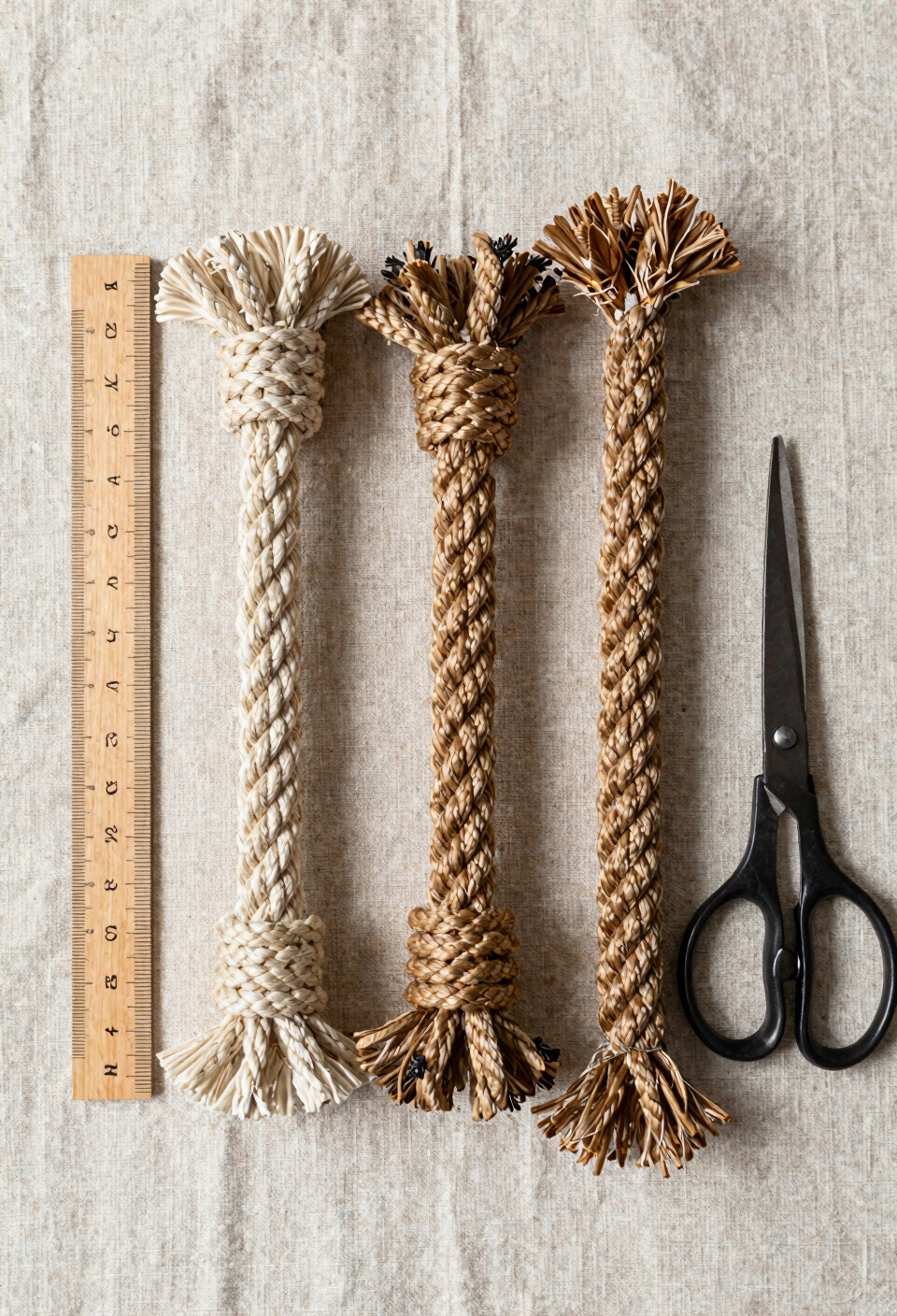
Here’s the thing about rope-toy size that trips people up—you’d think a massive, thick rope would be basically indestructible, right? Not quite. I’ve learned that the real sweet spot isn’t always “go big or go home.” You want to find that fit balance between thickness and your dog’s actual bite mechanics. A rope that’s too chunky might be harder for your heavy chewer to grip and shred, sure, but it also means they’ll lose interest faster. Conversely, thin ropes get demolished in days. I’m talking medium-to-large diameter here—thick enough to resist fraying, but sized so your dog can actually engage their natural chewing instinct. Consider your dog’s size and strength, as larger breeds with powerful biting force require more robust rope construction to withstand their aggressive chewing habits. Otherwise, you’re just buying expensive rope they’ll ignore.
Recommended Products
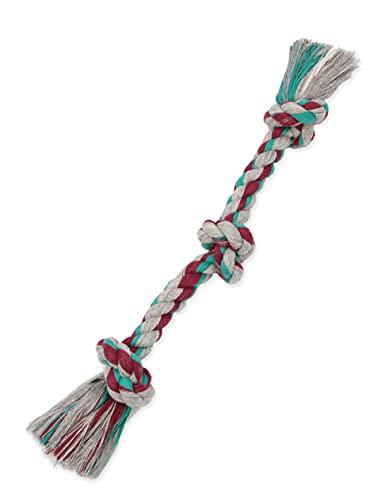
INTERACTIVE FUN: Designed for playing tug of war with dogs, this knotted rope dog toy is perfect for tossing, catching and pulling during interactive play, or as a dog chew toy for solo play time.
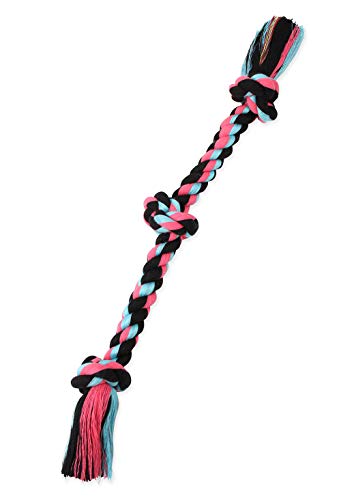
INTERACTIVE FUN: Designed for playing tug of war with dogs, this knotted rope dog toy is perfect for tossing, catching and pulling during interactive play, or as a dog chew toy for solo play time.

Value-Packed Rope Toys Set: Includes 3 durable rope toys for tug-of-war, chewing, and dental cleaning, with 2 dog bags for convenient cleanup. Designed for large dogs and aggressive chewers, it combines fun and practicality to keep your pet entertained
Material Durability Alone Isn’t Enough: Why Supervision Still Matters

Even if you’ve picked the perfect rope toy—the right thickness, the right size, the right braid pattern—you can’t just hand it to your dog and walk away expecting it’ll last forever. I mean, supervision is basically non-negotiable here. You’ve got to keep your monitoring frequency up, especially during those first few chewing sessions when your dog’s still figuring out how to destroy it most efficiently.
Here’s the thing: shredded rope strands create real ingestion risks. Your heavy chewer doesn’t care that swallowing fibers is a bad idea—they’ll do it anyway. That’s why I check my dog’s toys constantly for fraying, loose knots, and missing chunks. Yeah, it’s tedious, but it beats an emergency vet visit. Remember that no toy is truly indestructible, regardless of marketing claims or material composition. Obviously, replace any toy the moment it starts falling apart.
Best Rope Toys for Heavy Chewers: Real Durability Comparisons

Now that you’ve got the supervision part locked down, let’s talk about which ropes actually hold up when your dog decides they’re a personal chew project. I’m sure you’ve noticed that not all rope toys are created equal—some fall apart in days, others last weeks. The difference usually comes down to fiber braid patterns and how tightly manufacturers weave them. Consumer testing protocols aren’t standardized across brands, which honestly makes comparing durability tricky. That said, thicker, multi-knotted designs consistently outlast thin braids. Mammoth knotted ropes show up frequently in owner reviews for moderate chewers, while fire-hose style toys edge them out for aggressive destroyers. When selecting rope toys, prioritize reinforced seams and materials with solid core construction, as these features significantly impact longevity for powerful chewers. The real kicker? Even “heavy duty” ropes typically fail at knots or ends first, not the middle sections.
Recommended Products
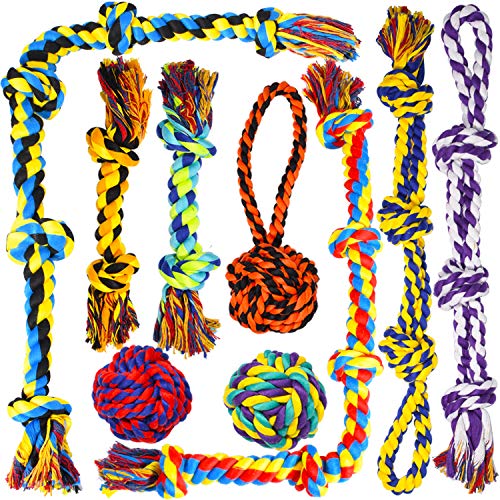
INDESTRUCTIBLE DOG TOYS FOR AGGRESSIVE CHEWERS MEDIUM TO LARGE BREED: XL sized strong dog toys set are popular combination of rope dog chew toys, contains 27 inches of 5 knots dog rope toys for aggressive chewers, round rope ball dog toys, multi knots cotton rope dog chew toys and tug of war rope ball

【 LARGE DOG ROPE TOY】Our large dog toys to keep your dog entertained is here! Long 25in/63cm 3 knots rope dog toys is carefully designed to bring endless interactive fun for both dog and owner. Every day of your dog's life will be full of joy and vitality!

【SAFE AND STURDY】 Durable dog rope, the twisted close-knit design make it more sturdy and durable,safe for you pet chewing and playing
When to Replace Your Rope Toy: Safety Red Flags
Because rope toys don’t come with expiration dates stamped on them, you’ve got to play quality-control inspector yourself—and honestly, that’s where a lot of dog owners drop the ball. I’m sure you’ve noticed fraying around the edges or loose knots starting to unravel. That’s your cue to inspect regularly and establish a discard policy before your pup swallows stray fibers.
Now, here’s the thing: visible strands breaking off, missing chunks, or knots that’ve completely come undone? Time to toss it. You want to catch these red flags early. I mean, even the toughest rope toys eventually fail, usually at the ends or attachment points. Similar to how rock climbing rope leashes maintain durability through quality construction, rope toys made with premium materials will still deteriorate over time with heavy chewing and require vigilant monitoring. Don’t wait until your dog’s actually ingesting pieces—that’s playing with fire. Replace immediately when deterioration kicks in.
Recommended Products
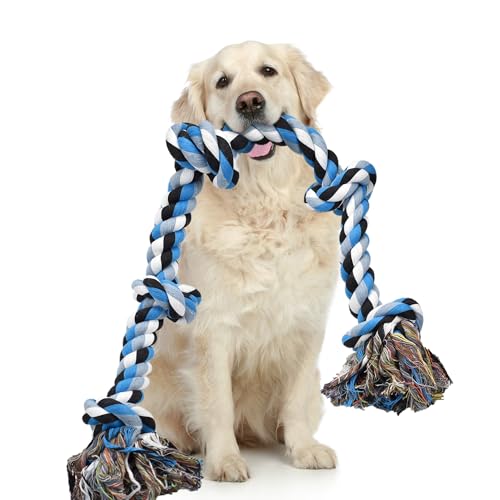
Safe and Tough Dog Toys : This rope dog toy is made from nature washable cotton, safe for you pet chewing and playing. This nearly indestructible dog toys will entertain your dog for hours

8 Pack Dog Toys for Aggressive Chewers: Includes 2 knotted tug ropes, 2 large rope balls, 1 rope ball with handle, and 3 knotted chew ropes in different styles and sizes. This dog rope toy set gives large dogs more ways to chew, tug, fetch, toss, carry, and play.

REAL-TIRE TOUGH: These strong dog toys are ideal dog toys for extreme chewers Dog toys in the TireBiterII range are made in North America from an advanced natural rubber formula for extra long lasting play.
Frequently Asked Questions
Can Wetting and Freezing Rope Toys Actually Extend How Long They Last?
Wetting and freezing won’t make your rope toy last longer—it just temporarily extends chewing time. When the toy soaked freezes, the texture change slows your dog’s shredding, but the underlying durability remains unchanged.
Are Rope Toys Safer Than Rubber Chew Toys for Aggressive Chewers?
I know you’d think rope’s safer, but I’d argue rubber wins this safety comparison. Rope strands create ingestion risks; rubber toys undergo durability testing better. Both need supervision—choose based on your dog’s swallowing habits, not material alone.
Do Rope Fibers Really Help Clean Dogs’ Teeth During Play?
Yes, rope fibers do help clean teeth through gentle dental abrasion as your dog chews. The fibers massage gums while your dog’s saliva enzymes work to reduce plaque buildup, though they’re not a replacement for brushing.
Why Do Knots and Attachment Points Fail Before the Rope Itself?
Knots concentrate tension at single points where fibers bunch together, creating weak spots. I’ve found that stitch degradation accelerates there since dogs instinctively target these areas. The rope’s uniform weave resists better than these concentrated failure zones.
Is Braided Cotton Better Than Polyester for Heavy-Chewer Rope Toys?
I’d argue it’s complicated—braided cotton offers better fiber breathability and traditional durability, but here’s what matters: polyester often outlasts cotton because it resists moisture absorption. Your heavy chewer’s needs trump material preference.
Conclusion
Look, I’m sure you’ve noticed that rope toys can vanish faster than snacks at a party. But here’s the thing—a quality rope with proper supervision isn’t just a toy; it’s your heavy chewer‘s best friend. Now, knowing when to retire it keeps your pup safe. All right, invest in durability, watch for wear, and you’ll actually get your money’s worth. Your wallet will thank you.